
Records in a Fairfield Resident Lookup
A name search in Fairfield is never one database. The towns hold their own municipal records. The state runs separate systems for courts, vital registrations, voters, licenses, and business filings. So the question you ask decides where the answer lives. The table below sorts each record by what it can tell you. It also shows the route to it and the limit that stops it from becoming a full identity profile.
| Record | What It Confirms | Where to Search | Access |
|---|---|---|---|
| Assessor or property card | Assessed owner, situs, mailing, parcel, transfer clue | Municipal Vision or GIS | Portal, card request, phone route |
| Voter registration | Public registration name, address, party, year, status | Connecticut Voter Lookup | Public fields, registrar, regulated file |
| Land record | Grantor, grantee, lien, mortgage, release, legal description | Town Clerk or Cott portal | Index, image, vault, mail |
| Court record | Party, docket, court, status, public filing history | Connecticut Judicial Branch | Online, clerk terminal, copy request |
| Vital record or index | Birth, death, marriage, adoption, family connection | DPH, town registrar, library | Eligibility, ID, fee, or historical access |
| Business or license result | Entity, agent, credential, status, effective dates | SOTS and eLicense | Public search, role-specific fields |
| Directory, obituary, or census | Dated household, address, relationship, historical clue | Libraries, NARA, FamilySearch | Shelf, scan, microfilm, catalog |
Start from the fact you already trust. An address sends you to the assessor and the GIS map. An old street with a year sends you to a city directory. A death date points to vital records and obituaries. A docket number goes straight to the court. A family connection may need probate or an official adoption-search program.
Fairfield Court Search Fields
Connecticut's civil inquiry portal is the statewide front door for a Fairfield County party search. Its modes cover party name, docket number, attorney or firm Juris number, and property address. The property-address mode applies to summary-process and foreclosure matters. It also lists court events, the short calendar, legal notices, and pending foreclosure sales. A party-name search starts with a last name. First name and filters for location, category, status, and sort order narrow it down.
What the public sees includes the case name, docket number, court location, category, party names and roles, attorneys, motions, pleadings, objections, history, status, and scheduled dates. Electronic civil material generally begins January 1, 2014. Small-claims electronic material generally begins October 16, 2017. Older files may require a terminal at the courthouse. Family, juvenile, sealed, erased, and protected material carries stronger access limits.
| Party last name | Required core key in the documented party-name workflow. |
|---|---|
| Party first name | Optional narrowing field for a common surname. |
| Location | Judicial district or geographic area such as Bridgeport, Danbury, or Stamford-Norwalk. |
| Category and status | Case grouping and pending or disposed context where the portal exposes them. |
| Docket number | Direct key when a case identifier is already known. |
| Property address | Limited mode for specified case types, not a general owner search. |
Start with the Judicial Branch case-lookup page for criminal, motor-vehicle, civil, family, and small-claims matters.
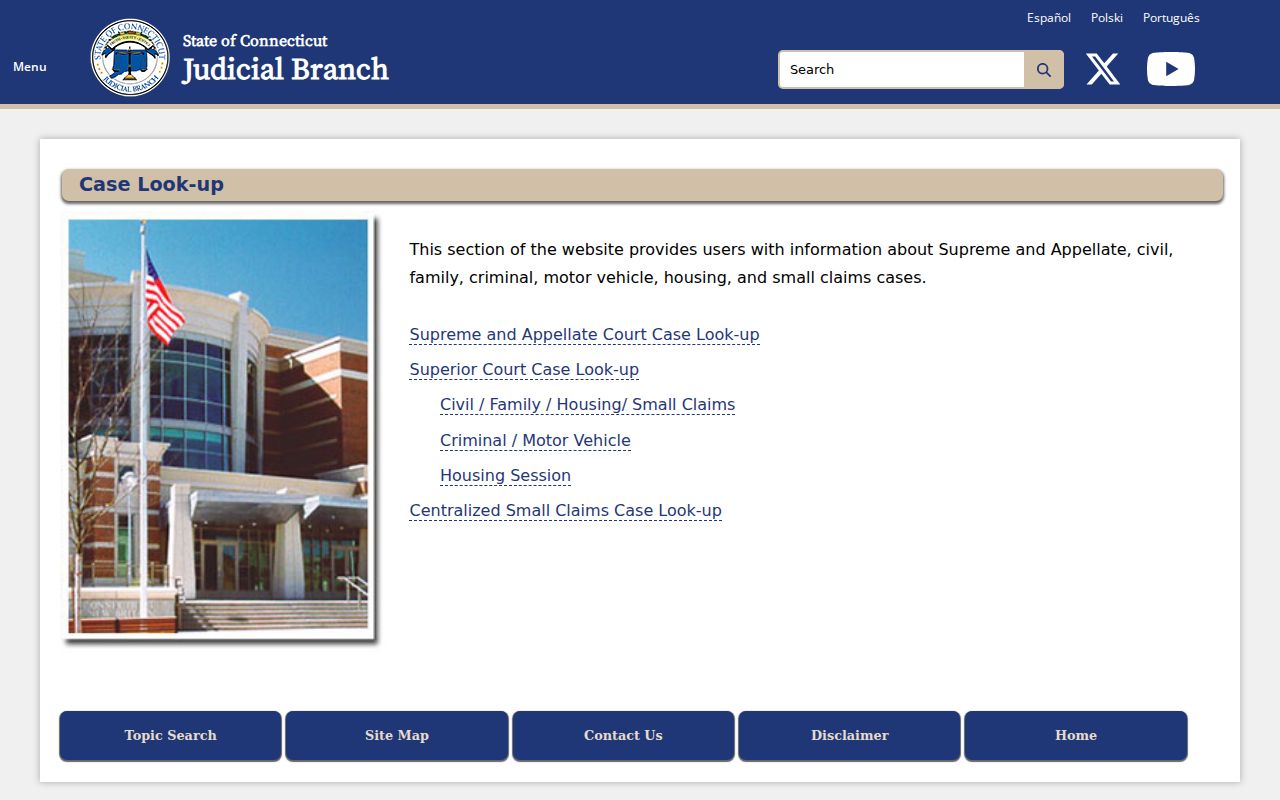
The statewide entry page helps you pick the right court division before a same-name result gets mistaken for evidence.
Fairfield Same-Name Verification
A shared surname proves little in Fairfield. Keep the original name order, middle initial, suffix, and maiden or married form. Trust and estate forms matter too, along with spelling variants. Then add only low-risk corroborators. Municipality, parcel, public birth year, a spouse in an old record, a business entity, court location, event date, or directory year can each tip a match one way. A mailing address is just a clue. A deed book and page is a recorded instrument. Neither alone proves anyone lives there now.
- Write the name exactly as it appears, then list variants without replacing the original.
- Use the likely town assessor, voter lookup, library index, or SOTS business result as a first anchor.
- Compare town, address, parcel, birth year, party role, event date, or entity number.
- Open the court detail or image and check the record's role, date, and custodian.
- Order a certified copy only when the official document, not an index clue, is needed.
A record can be accurate and still belong to someone else with the same name. Keep an unresolved match marked unresolved. That discipline beats careless merging. A property owner, a court party, and a directory entry can share one name. Do not merge them just because the three names look alike. Cite each Fairfield result the way you found it.
Note: Cite any public result with its source, date, and role. Do not copy it into a new personal profile.
Fairfield Vital Events and Eligibility
Birth, death, marriage, adoption, and divorce records each follow their own path in Fairfield. DPH holds statewide registrations from July 1, 1897 forward. The local registrar in the event town holds the town copy. Births under 100 years are restricted under Conn. Gen. Stat. §7-51. Records at least 100 years old are open under the stated rule. People 18 or older can generally request certified death copies. Social Security number limits still apply. Marriage copies also go to people 18 or older. Spouses' Social Security numbers stay restricted.
A birth request needs the subject's full name, date and town of birth, parents, requester details, and ID. It also needs a relationship or reason and payment. The state form lists $30 per copy. The inspected town form uses a $20 full-copy structure. The state death form lists $20, relationship options, an SSN question, and a veteran section. A marriage form lists the spouses, event date and town, requester, and a $20 payment. Divorce decrees live with the Superior Court, not DPH.
Use the Connecticut death-certificate route for the current form and access conditions.
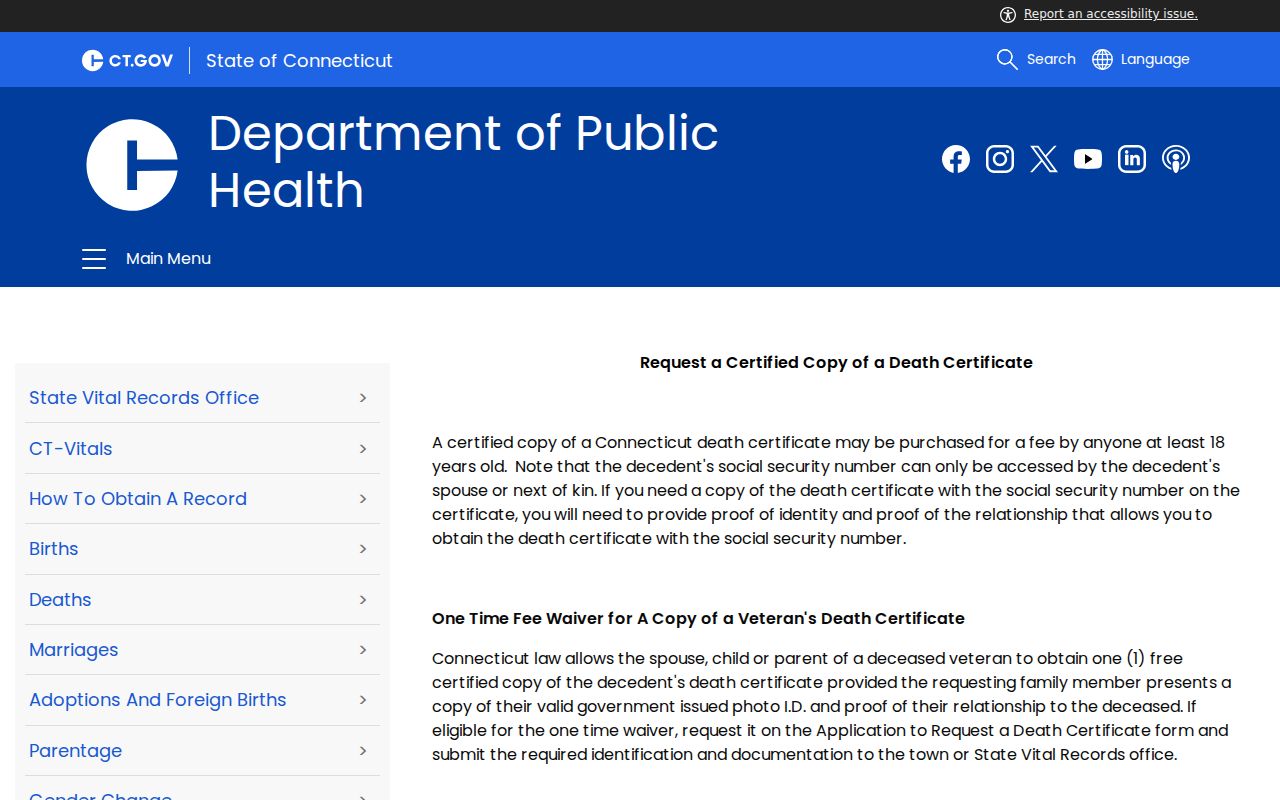
The form itself shows why relationship, ID, record type, and requested fields must be sorted before anything is mailed. Greenwich's municipal vital-record counter is one concrete local route for birth, death, and marriage certificates in Fairfield County.
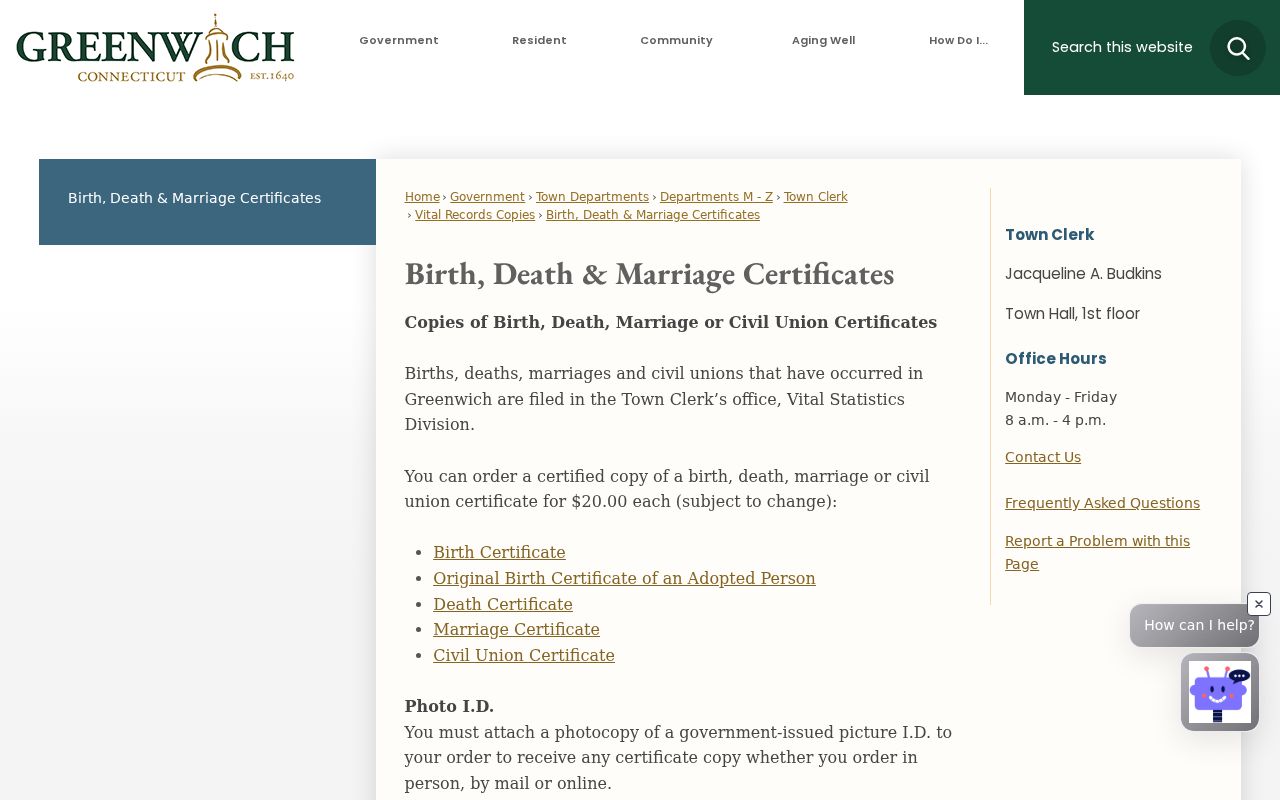
Other towns set their own online, mail, and counter instructions. Start from the event town and use its current registrar route.
Fairfield Heir and Adoption Routes
An heir search in Fairfield County is really a chain of dated records. Each one hands you the next clue. Begin with a death index, an obituary, or a cemetery entry. Work outward from there. Figure out which probate district served the town. The district clerk can pull the public estate index or file. From there you can follow fiduciary, heir, notice, and property-transfer entries. A later deed filed with the Town Clerk may name an estate. It may also name a trustee or the eventual purchaser. One caution applies, though. An obituary is not proof of where anyone lives now.
Adoption questions follow a protected route rather than a standard resident lookup. DPH and DCF split the process into non-identifying or medical information. They also handle contact preferences and original birth certificates. According to DCF's own research, cases after 1944 go to its Search Unit. Cases before 1944 go to Probate Court. Adult adoptees, adult former foster persons, birth parents, and eligible birth relatives all use the agency process. It serves adult-family connections. The DCF adoption search forms and information lay out the official path.
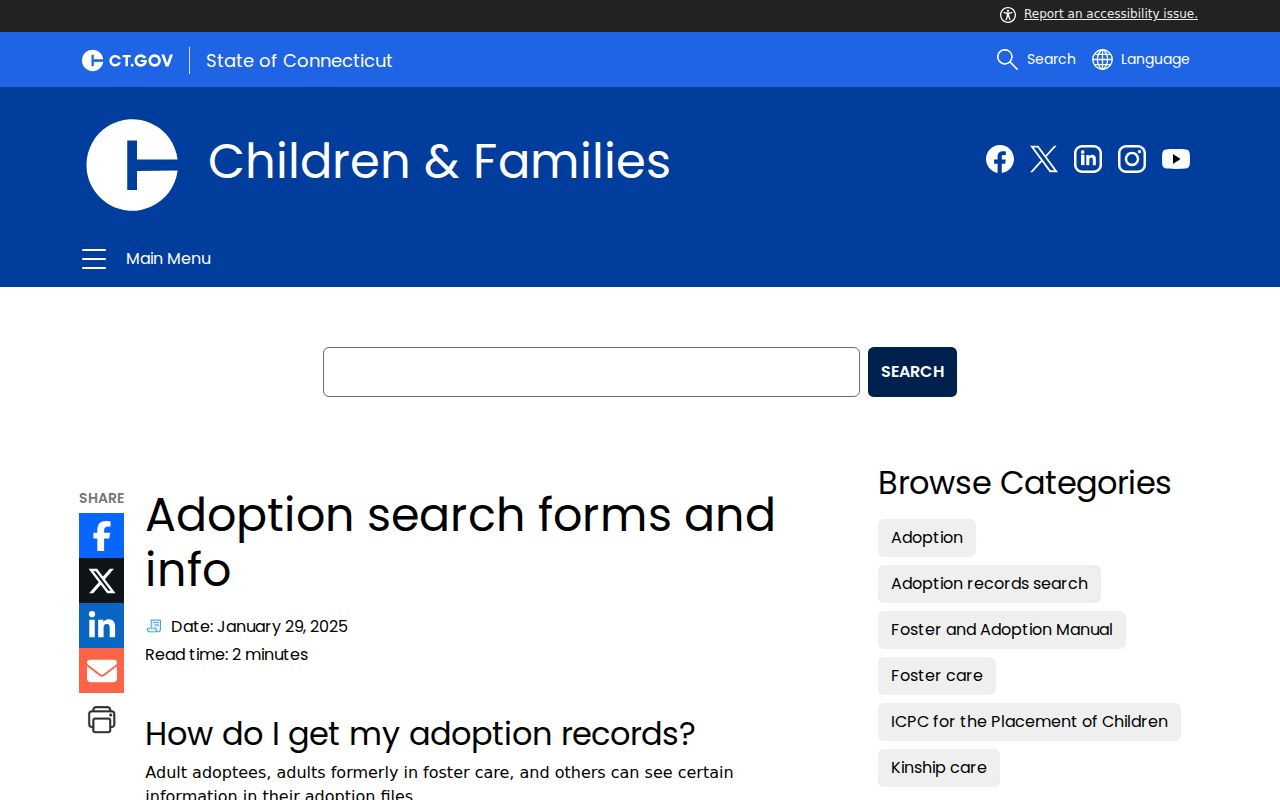
An official search program keeps family reconnection distinct from an unrestricted request for someone's address.
Fairfield Business and License Affiliations
Business and credential records can separate two Fairfield people with the same name. They do it without turning a filing address into a home address. Secretary of the State business records may list an entity name, status, formation or annual-report dates, and registered agent. Filings also carry a principal or filing address. They include any officers or managers named in the filing. Assumed-name filings stay with the Town Clerk. Grab the entity number and filing date. Those separate similar organizations fast.
eLicense takes license type, prefix, number, status, business or DBA name, and first and last name. It also accepts city, state, ZIP, and country. Its detail view shows credential number and type, mailing address, effective and expiration dates, and status. Some results add scope or supervisor. Remember the limit here. A result proves a state credential at one point in time. It does not prove a current home, household, or personal relationship. The Connecticut eLicense lookup is the direct state route.
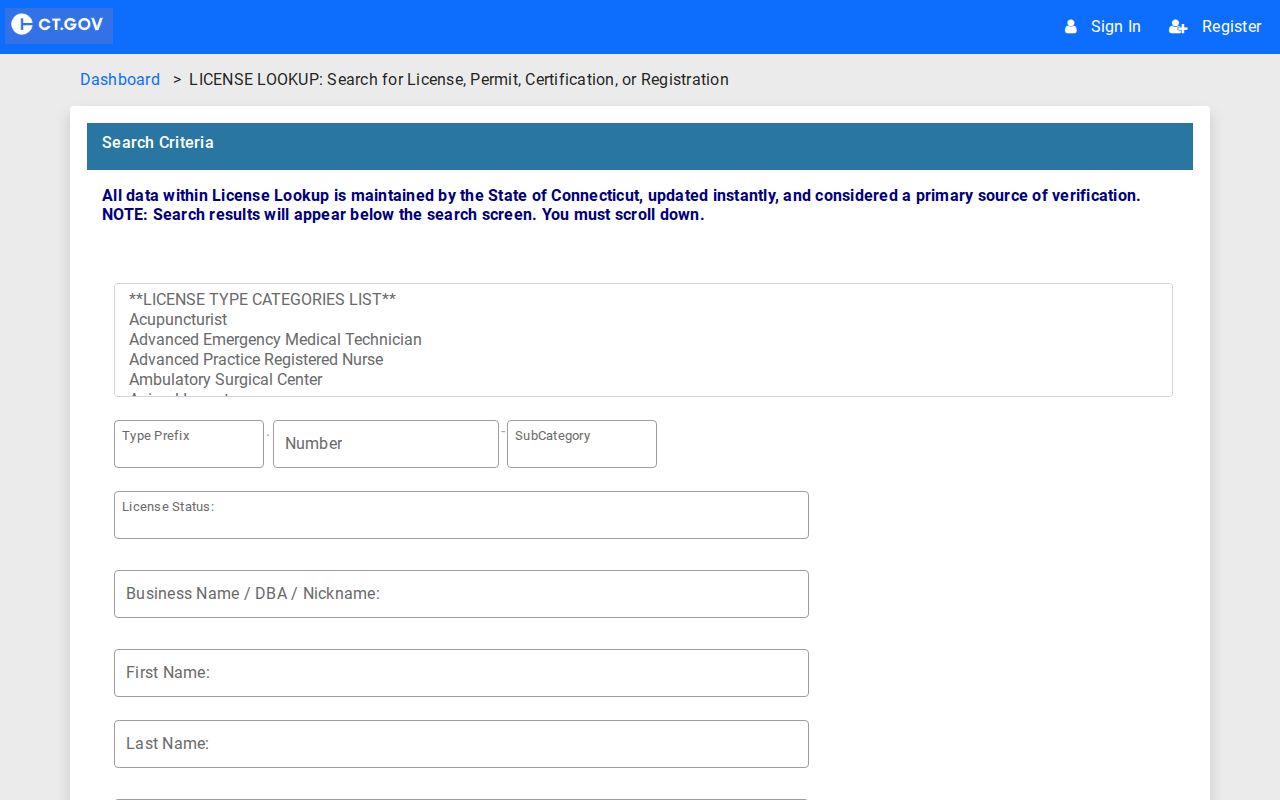
Note: record the credential type, number, status, and effective date, so any name match stays tied to the role actually shown in the file.
Fairfield Court Results Need Context
A Fairfield court index is not a verdict. It is not a criminal-history certificate either. One entry might be an accusation, a pending matter, a judgment, or a disposed file. The Judicial Branch itself warns that the online lookup is a public service. It is not the official record. Legal notices list a party to be notified, the case name, docket, court location, and the notice's start and expiration dates. They also include a way to view the notice itself. That table is a genuine result format, but the full file is another matter.
Coverage has edges. Small Claims has electronic records beginning October 16, 2017. Criminal and motor-vehicle lookup controls can shift with the live application. A State Police Bureau of Identification request is a separate mail process with a listed $75 state check and $15 fingerprinting. A statute separately lists a $36 name search. Never treat a free index hit as a substitute for the record the law requires. The Judicial Branch legal-notice list shows the fields a public notice can carry.
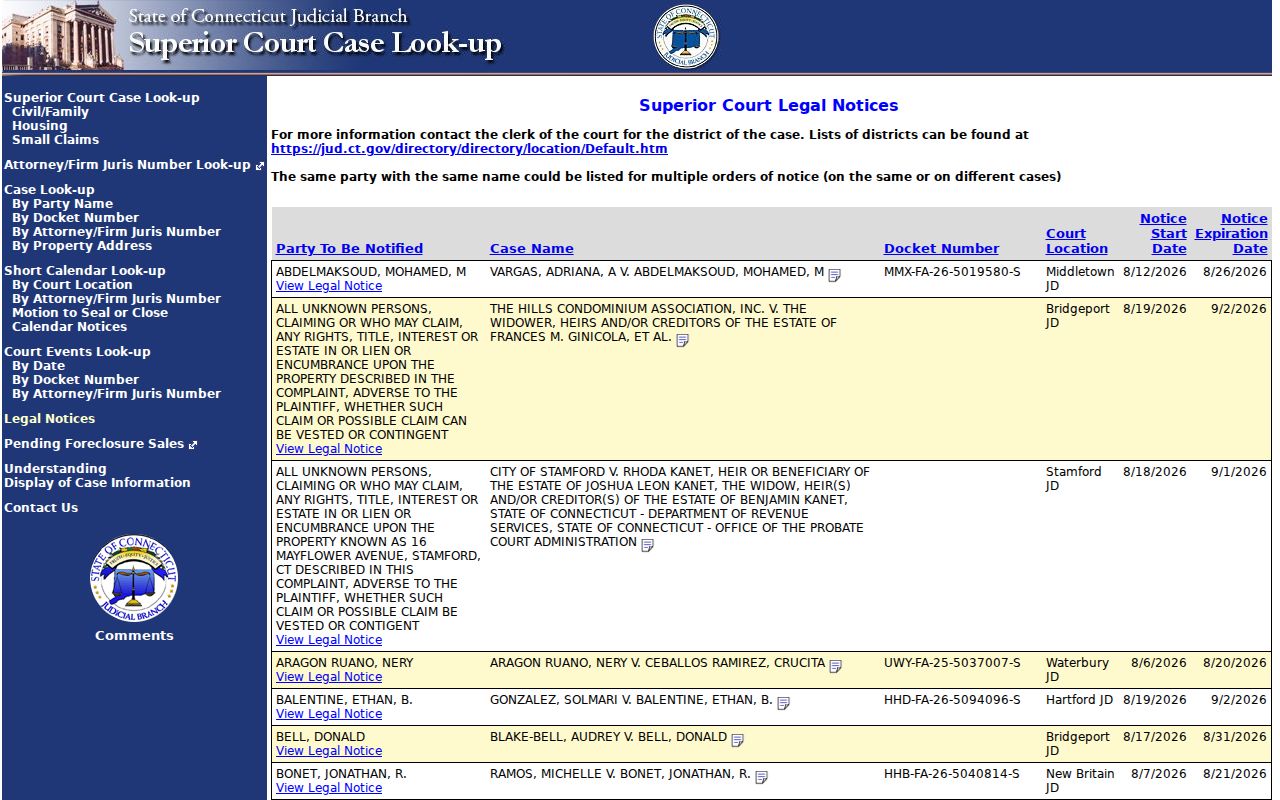
Treat the docket as your stable key. Then ask the clerk for the complete file and certification if needed. For criminal-justice status, the official DOC landing page gives scope and its daily-update warning.
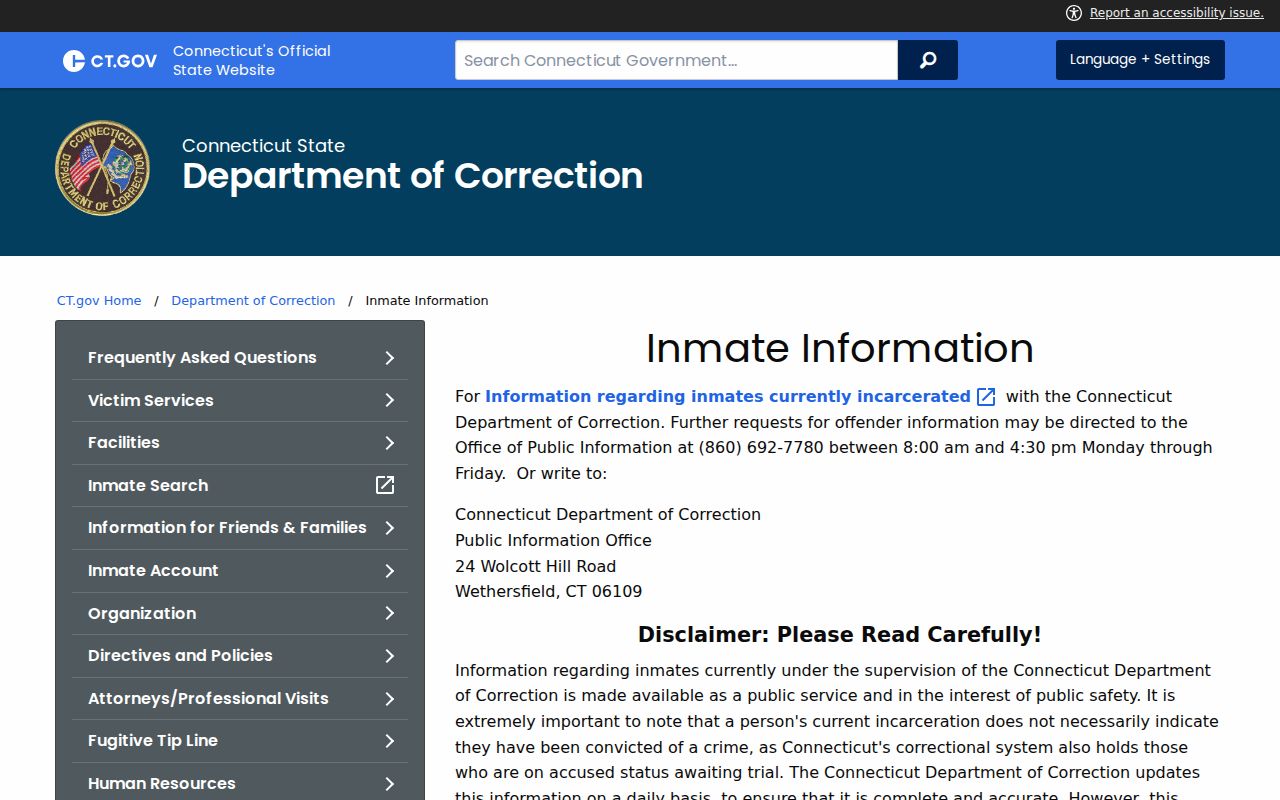
DOC supervision is status information alone, and it does not establish a conviction or a current Fairfield address by itself.
Fairfield Corrections and FOI Requests
When a Fairfield record is wrong, go to the custodian who created it. A parcel error belongs to the assessor or Town Clerk. A voter error belongs to the Registrar of Voters. Court-index errors go to the clerk. Vital-record corrections go through DPH or the local registrar. License errors go back to the licensing agency. The Connecticut Freedom of Information Act is an access law, not a universal correction form.
When an existing record simply is not available, Conn. Gen. Stat. §§1-200 through 1-242 supply the statewide FOI framework. State guidance describes a 25-cent per-page ceiling for state copies. Municipal copies carry a 50-cent ceiling. Ask for defined fields: a docket, a parcel, a book and page, or a dated file. No office has to assemble a brand-new resident report from several systems.
Keep the request date, your source citation, the response, any redaction, and appeal details. A "not found" result can mean a coverage gap. It can also mean a spelling variant, a protected record, or the wrong custodian altogether.
Fairfield Name Lookup Workflow
The cleanest resident lookup starts with one independent anchor. It then moves across records in a controlled order. With a name but no address, try a municipal assessor in the likely town. A public voter match, a library index, or an official business or license result can work too. With a known address, start with the parcel card and the land record. Death and family questions call for the vital and probate routes first.
- Normalize the name and save all variants.
- Anchor it to town, parcel, public birth year, event date, court location, or entity number.
- Check a second custodian with a different record purpose.
- Open the image or detail record and copy the fields, role, and date.
- Use a certified-copy route when an official document is necessary.
- Stop when a safety, sealing, eligibility, or coverage rule blocks the next step.
That order cuts down false matches and makes the final note reproducible. It also keeps an old directory occupant, a property owner, a voter, and a court party from being silently merged into one person.
Fairfield Resident Lookup Safety Rules
Connecticut's Address Confidentiality Program gives eligible survivors a substitute mailing address and protects the underlying address through statutory processes. A voter can seek suppression under Conn. Gen. Stat. §9-50(d). The federal Driver's Privacy Protection Act restricts DMV personal information. Family, juvenile, adoption, sealed, erased, protected-victim, and confidential records remain governed by their own rules.
Lawful personal use. Use a Fairfield resident lookup for family history, reconnecting, civic research, a public filing, or a personal safety question. Do not use it to stalk, harass, threaten, intimidate, or expose someone whose address is protected. A public field is not a license to build a private dossier.
Connecticut's Data Privacy Act, found at Conn. Gen. Stat. §§42-515 through 42-526, grants consumers several tools. Covered businesses must honor requests for access, correction, deletion, portability, and certain opt-outs. Those powers stop at the town clerk's counter. A municipal deed stays on the land records, and vital, court, voter, and DMV rules keep their own authority.
The state's own framing of the Connecticut registry description carries a caution worth repeating. Registry entries reflect last-known or statutory information only. They are not a risk assessment of any person.
Treat every public-safety record exactly as the label describes it. A same-name hit in a Fairfield resident lookup proves nothing by itself, so corroborate before you conclude anything.
Fairfield Lookup Definitions
Small words can hide big differences in access. A
on one list may be a
on another, so use the custodian's own term. Keep the underlying source attached to whatever result you carry away.
- Docket
- The court's identifying number for a case, used to open the public case path or request the file.
- Index
- A searchable list of names, dates, document types, or citations; it may show less than the record image.
- Record image
- A scan or document view of the filed instrument, notice, form, or page.
- Certified copy
- A copy issued or certified by the custodian as an official reproduction for a permitted purpose.
- Disposition
- The recorded status or outcome of a court matter; it is not the same as an charge.
Clear definitions keep a name search honest. A result page in a Fairfield directory can point you to a route while the certified copy, sealed file, or restricted certificate itself stays out of reach.