
Fairfield Sources for Previous Residents
A house-history search should name the type of evidence before opening a portal. Deeds identify recorded property parties. City directories and census schedules identify dated household appearances. Obituaries and cemetery files can explain a departure or death. Permits, certificates, surveys, and Sanborn maps date changes to the physical place. Probate files can connect an estate, fiduciary, heir, and later transfer.
| Source | Years or cutoff | Where held | What it shows |
|---|---|---|---|
| Bridgeport land-record index | 1948-current index; 1983-current images | Bridgeport I2 and Town Clerk | Grantor, grantee, instrument, date, book/page, later images |
| Greenwich land records | Digitized back to the 1920s | Town Clerk, publicsearch, vault | Deeds, mortgages, liens, releases, maps, book/page |
| Monroe land records | 1823-1912; index 1823-1924 | FamilySearch catalog and Monroe originals | Earlier deed books and index entries |
| Sherman land records | 1803-1933; index 1804-1931 | FamilySearch catalog and Sherman originals | Book and index coverage for a backward trail |
| City directories | Bridgeport 1855-1990; Norwalk 1871-1991; Greenwich digital 1890-1922 | Libraries, history centers, NARA | Dated occupant, address, household, street sequence |
| Federal census | 1790-1950 released set | NARA, 1950 Census, libraries | Household members, ages, relationships, birthplace, district |
| Newspapers and obituaries | Local runs with gaps | Bridgeport, Norwalk, Greenwich libraries | Death, marriage, birth, address, relatives, events |
| Permits, maps, surveys | Municipal and collection-specific | Town offices, museums, GIS, LOC | Building footprint, work, road, lot, and physical change |
The coverage is not one county-wide number. Start with the town in the situs address, then move to the nearest matching library or archive collection. A gap in one line is a reason to compare another line, not a reason to invent the missing household.
Start With the Fairfield Parcel Card
Begin with the current assessor card, even when the goal is historical. Copy the owner, mailing address, situs, parcel or account number, assessment year, building details, and the most recent sale or transfer volume and page. The parcel ID can bridge a changed street number, a private road, a subdivision, or a postal city mismatch. The mailing address may point to a trustee, entity, attorney, or another location, so mark it as mail rather than occupancy.
Then compare the card to GIS and the legal description. A map can show a split parcel, flag lot, shared road, or adjoining property. A plat can show an old lot or subdivision name. A deed can name the legal parcel even when the street line is missing. The card is a starting citation, not a complete title examination.
The Fairfield Vision assessor search is the local example used for the current card route.
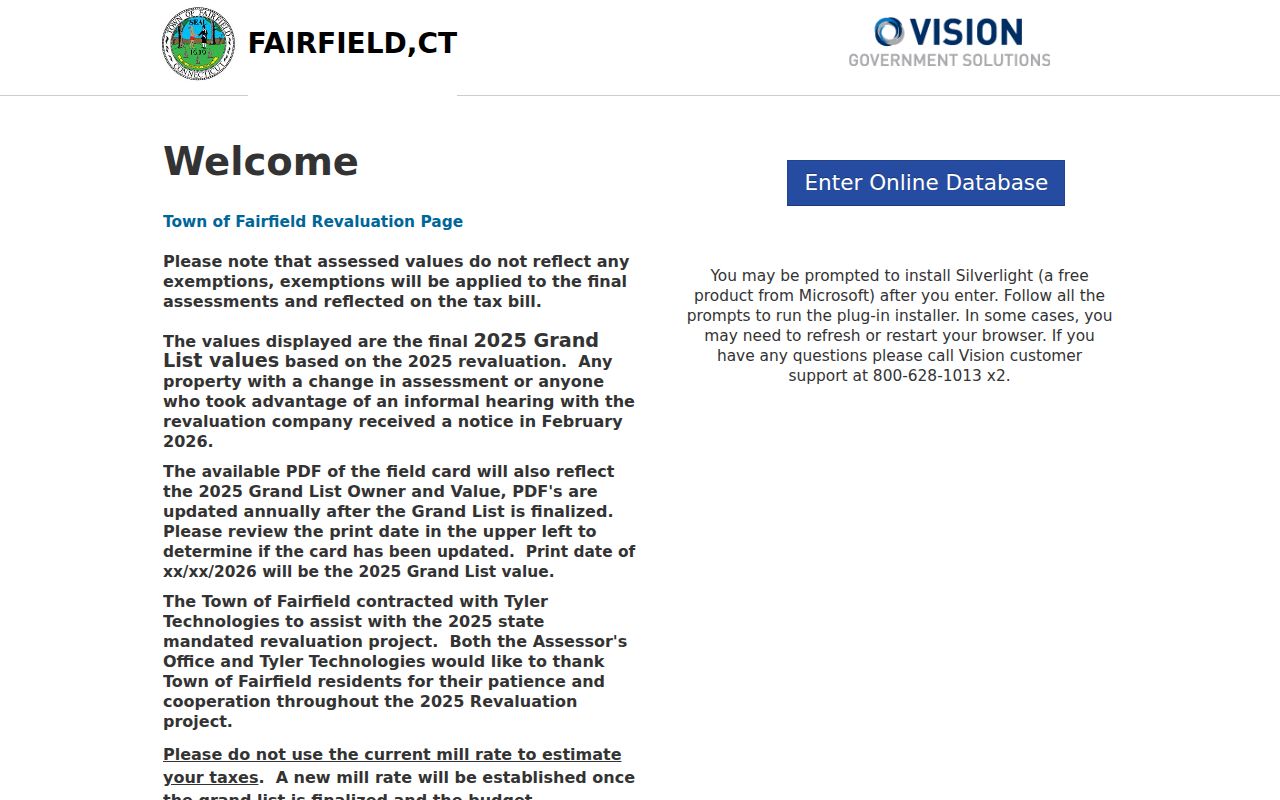
Save the card date because a current owner field can change while the old deed trail remains fixed.
Bridgeport and Greenwich Deed Cutoffs
Online land-record coverage depends on the town. Bridgeport's inspected I2 index begins January 2, 1948, while indexed images begin June 1, 1983. The newer Bridgeport publicsearch screen adds a quick search with date presets and index-only or OCR scope. Greenwich reports digitized land records from the 1920s forward and supplies current publicsearch, assessor, GIS, and vault routes. Older books can still exist at the clerk even when the web index ends.
Bridgeport's Town Clerk page gives local fee and submission information. A recorded land copy is typically charged by page, and certification is separate. Current recording fees changed on July 1, 2025 under Public Act 25-168, so historical advice should not be copied into a current request without checking the town's fee sheet.
The Bridgeport land-record page explains the local index, map, and copy route.
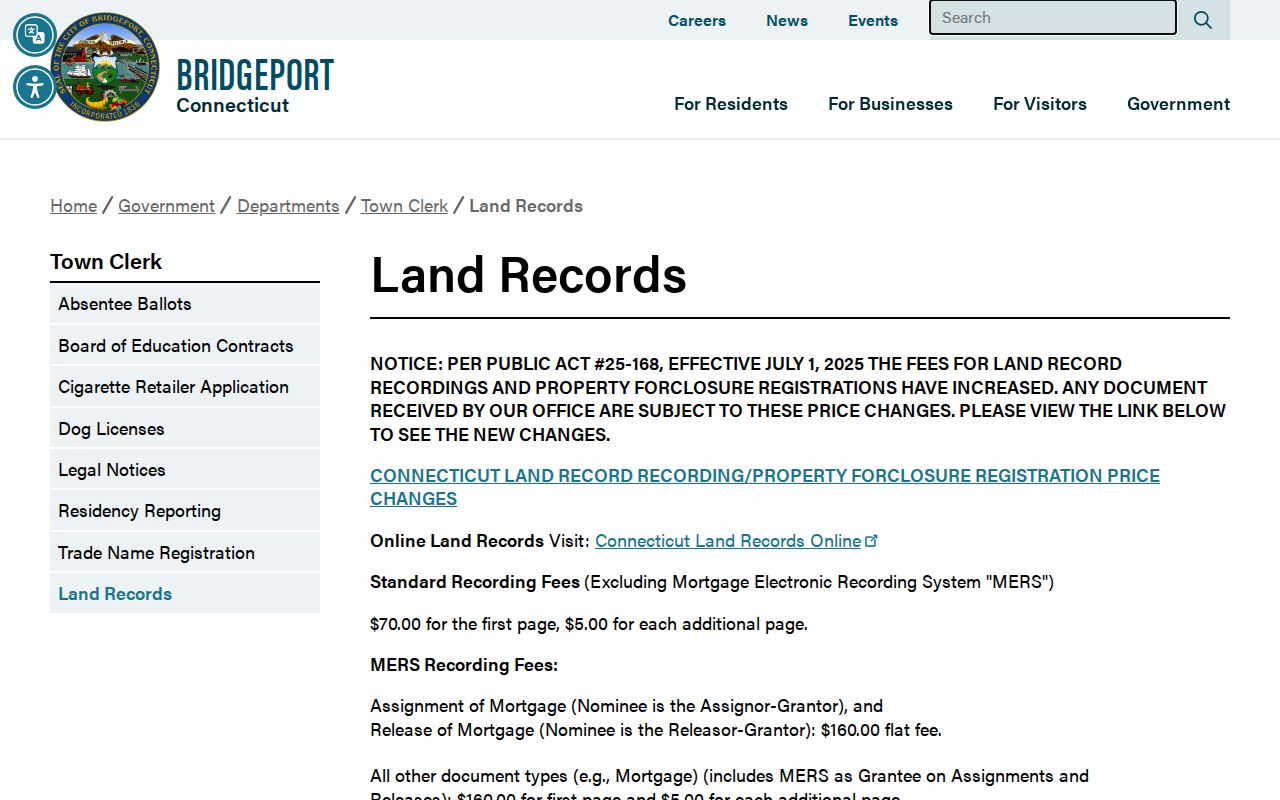
The Town Clerk is the fallback when a digitized image or older book is not exposed online.
Greenwich's Town Clerk page makes the local custodian distinction visible.
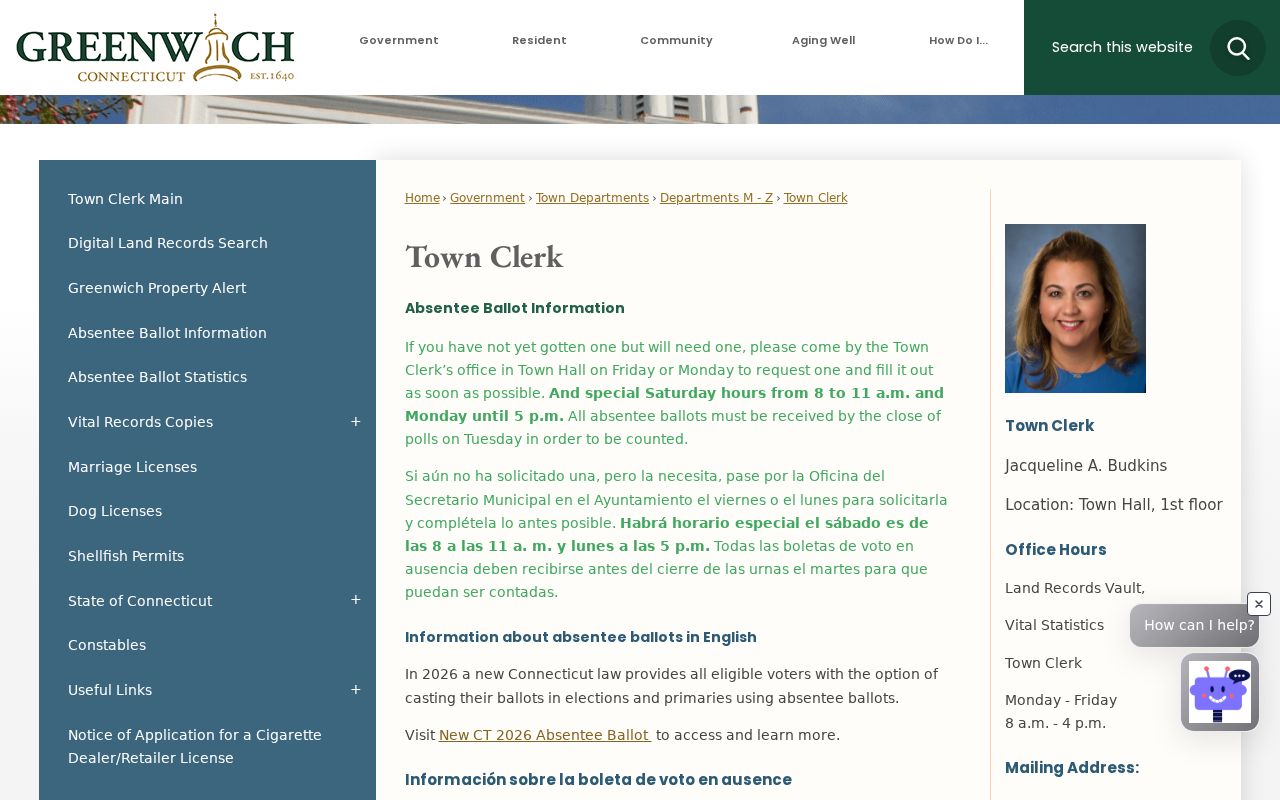
Record the town and the cutoff together so an absent web result is not mistaken for an absent deed.
Trace Fairfield Deeds Backward
A chain of title is a sequence of recorded ownership instruments. Start with the current assessed owner and the most recent transfer reference. Search the current grantee, open the deed or index entry, identify the prior grantor, and search that person or entity as the earlier grantee. Repeat until the local index cutoff, then move to older books, microfilm, a FamilySearch catalog, the State Library, or the clerk's vault.
- Copy the current parcel, legal description, owner, and transfer citation from the assessor card.
- Search the Town Clerk land index by grantee, grantor, document type, recording date, book, page, or document number.
- Read the instrument and identify the prior seller, trustee, estate, fiduciary, or entity.
- Search that prior party as grantee and match lot, subdivision, map, abutters, and legal description.
- Repeat backward and mark where the online index ends.
- Ask the clerk or archive for the earlier volume, index, image, or certified copy route.
- Grantor
- The party transferring or releasing an interest in a recorded instrument.
- Grantee
- The party receiving an interest or benefit in that instrument.
- Chain of title
- The linked sequence of recorded transfers for a parcel.
- Legal description
- The lot, subdivision, bounds, and related land language that can outlast a street number.
Greenwich's official summary for 19 Lakeview Drive, Lot 7 Riverside, models the result. It lists a 1908 deed at Book 114, Page 390 and later instruments through books including 369, 383, 402, 403, 443, 1350, 6162, and 8095. The sample includes deeds and certificates of devise, descent, or distribution, showing why probate-derived transfers belong in the chain.
Do not assume that a mailing address stayed the same or that a deed party lived at the property. The recorded role is the fact; occupancy needs a directory, census, or other dated source.
Fairfield Address Continuity Traps
An old street number can fail for several reasons: a name change, renumbering, subdivision, private road, village label, unit conversion, or postal-city difference. The research did not find a county-wide year-by-year chronology of these changes. Greenwich's street-name instructions show the administrative paper trail, including abutting-owner signatures, Planning and Zoning review, departmental approvals, Town Clerk involvement, and town-body action, but they do not provide a historical renaming year.
Bridge the mismatch with a parcel ID, legal description, historic map, directory cross-reference, subdivision plat, nearest cross street, and the town's address or street-name file. Keep the old and new strings in the notes. A guessed modern address can attach the wrong family to the wrong house.
Note: Legal lot and parcel identifiers are often more durable than a street number when a house history crosses municipal or postal naming systems.
Fairfield Past Households in Print
Ownership and occupancy are different trails. Bridgeport directories from 1855-1990, Norwalk directories from 1871-1991, Greenwich digitized volumes from 1890-1922, and Stamford runs can show a dated person at an address. Reverse sections are especially useful: start at the number and street, then verify the name alphabetically. Preserve occupation, spouse or widow notation, home or board marker, street abbreviation, and nearby entry.
Pair the nearest directory years with census years 1900, 1910, 1920, 1930, 1940, and 1950. The census can add age, relationship, birthplace, and household context. A directory can fill a year between censuses. A deed can explain an owner change. Do not force all three sources to say the same thing.
- Record the old street line, municipality, village, house number, and volume date.
- Read the reverse street section and copy the entry exactly.
- Check the alphabetical section, nearby entries, and abbreviation key.
- Pair the result with the nearest available census enumeration district.
- Use the obituary, cemetery, vital, probate, or deed trail to explain a departure.
The Fairfield city directory collections page has the full collection and entry-reading method.
Fairfield Maps Date the Physical House
Sanborn fire-insurance maps, surveys, atlases, permits, and historic photographs can show what stood on a parcel. Confirmed county map sets include Bridgeport 1898 with 75 sheets, Bridgeport 1913 with 113 sheets, a central Bridgeport 1904 sheet, Darien 1946, and Danbury through March 1950. A sheet can show a building footprint, use, outbuilding, street alignment, lot, and neighboring structure.
Maps are bounded evidence. They do not identify every person, prove a deed, or cover every rural house. Fairfield Museum's property files, Stamford house surveys, Greenwich Historical Society maps from 1890, 1900, 1908, and 1938, and local engineering records can fill a gap. Use the address and parcel ID to connect a map sheet to the deed rather than relying on visual resemblance alone.
Greenwich Historical Society's library and archives describe maps, deeds, directories, photographs, manuscripts, and finding aids.
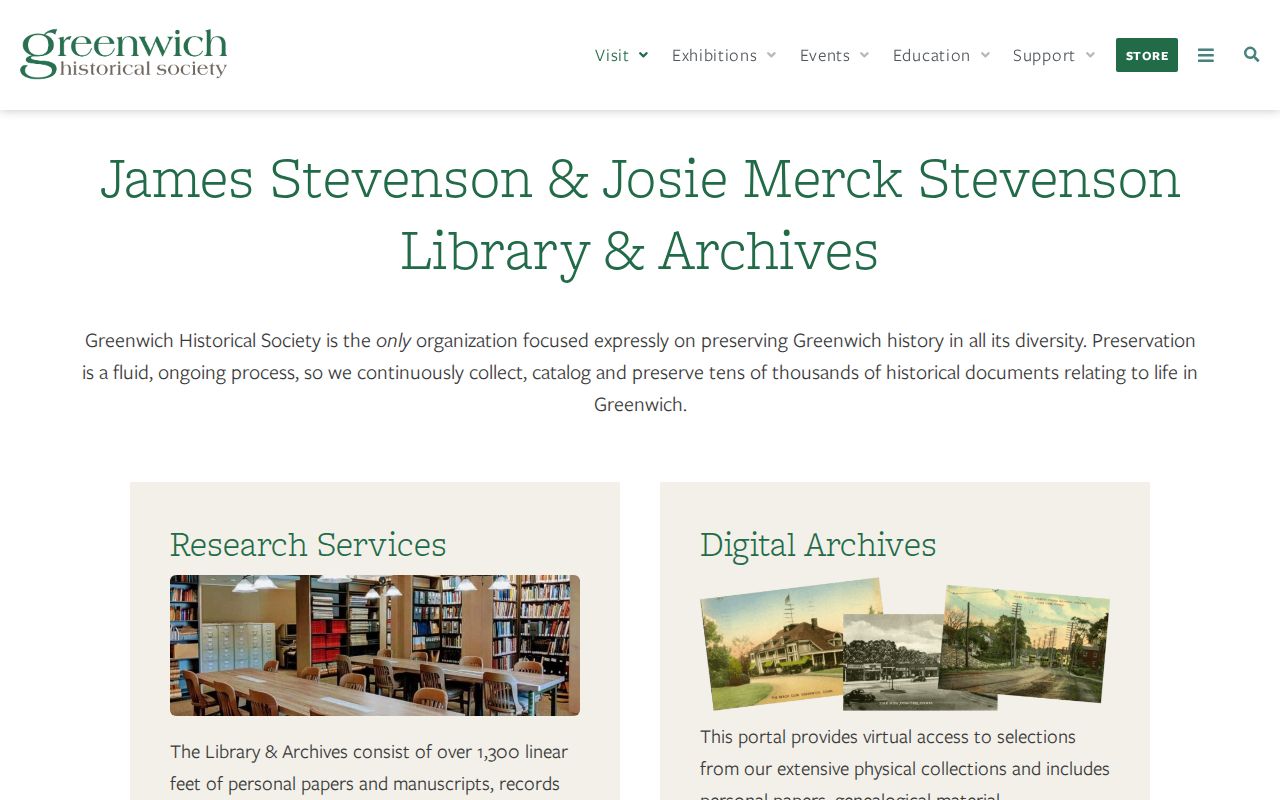
Archive finding aids can point to the map or house file that is not visible in a modern parcel viewer.
For a census-era address, the National Archives city-directory and census guidance explains how place names and enumeration districts can differ from modern labels.
Use the district description and map, not only a modern street search, when the household is historical.
Fairfield Obituary and Probate Endpoints
A former resident trail often ends in an obituary, cemetery, or probate file. Norwalk's Hour index covers birth, marriage, obituary, and article references, with newspaper microfilm from 1895 forward and a 1955 flood gap. Bridgeport's History Center holds newspapers, cemetery books, and WPA inscriptions. Greenwich Library maintains a newspaper index for local-interest articles, marriages, and obituaries from 1877-2012. Each index should be followed by the page, certificate, cemetery, or court source.
Probate may identify a fiduciary, heir, estate, notice, or transfer. The correct district follows the town, not a county clerk. A death record supplies a date and may identify an informant or next of kin, while the later deed can show where the property went. Keep the dated record roles separate from a claim about where someone lived at the end of life.
For an older land catalog, the Sherman FamilySearch catalog sample shows how town-specific books and indexes are described.
Catalog access can require an affiliate center or login, so record the catalog citation even when the image is restricted.
Fairfield Permit and Deed Timeline
Build the final history as a small timeline rather than a single story. An assessor card anchors the current parcel. A deed or probate instrument marks a recorded transfer. A directory or census places a household at a date. A permit dates physical work. A Sanborn map shows a footprint. An obituary or cemetery record provides a death or family endpoint. A gap is listed as a gap.
| Current card | Owner, situs, mailing, parcel, assessment year, and transfer lead. |
|---|---|
| Recorded deed | Grantor, grantee, date, book/page, instrument, and legal description. |
| Directory year | Dated occupant, street entry, household marker, and abbreviation context. |
| Census year | Household members, relationships, ages, birthplace, and enumeration district. |
| Permit or map | Construction, alteration, footprint, use, road, or lot evidence. |
| Obituary or probate | Death, relatives, fiduciary, estate, notice, or later property link. |
The timeline keeps “who owned it,” “who appeared there,” and “what stood there” from collapsing into one unsupported claim. It is the clearest way to tell a future reader what the record proves and what remains open.
Fairfield Previous Resident Source Quality
Use the strongest source for each statement. A recorded deed is best for a transfer. An assessor card is best for a current tax-roll owner. A directory is best for a dated printed occupant clue. A census is best for a household snapshot. A permit is best for a physical event. An obituary or cemetery file can establish a notice or burial, while probate can establish an estate role when the file is public.
Lawful house history. Previous-resident research belongs in family history, preservation, genealogy, and personal curiosity. Do not use an old address trail to stalk, harass, threaten, or track a living person. Do not republish protected or sensitive fields from a record image.
For current street-level records, move to the Fairfield street directory. The goal of a previous-resident search is a dated, sourced history of one place, not a list of living people.