
Fairfield City Directory Collections
The best first shelf is the Bridgeport History Center because its finding aid reaches beyond Bridgeport into many Fairfield County towns. Bridgeport's local run spans 1855-1990, while the regional table identifies substantial runs for Danbury, Darien, Greenwich, Norwalk, Ridgefield, Stamford, and Westport. Norwalk Public Library separately reports city directories from 1871-1991, cross-reference material from 1980 forward, and telephone books from 1980 forward. Greenwich Library's digitized historical directories cover 1890-1922.
| Collection | Years | Where Held | Access |
|---|---|---|---|
| Bridgeport local directories | 1855-1990 | Bridgeport History Center | Library shelf or research request |
| Norwalk city directories | 1871-1991 | Norwalk Public Library and local-history holdings | Library collection, microfilm, cross-reference |
| Greenwich historical directories | 1890-1922 digitized | Greenwich Library ContentDM and local-history collection | Online scan and OCR, restrictions may apply |
| Stamford directories | 1872; 1920-1991 runs | Stamford History Center | On-site research, appointment recommended |
| Fairfield house-history files | Selected local years | Fairfield Museum | Reference service, maps, surveys, property files |
| Circa-1930 regional volumes | Selected 1917-1935 and 1930-era coverage | NARA, State Library, local libraries | Finding aids and historical access routes |
These are not one continuous county publication. A volume may use a city, village, post-office, or railroad name that differs from today's municipal label. Check the title page, publisher, edition, included places, and abbreviation key before treating a name as a Fairfield address.
Bridgeport Holds the Regional Shelf
The Bridgeport History Center's city-directory table identifies Price and Lee Co., North American Directory Publishers, and other publishers across the runs. Beginning in 1895, the books usually contain both an alphabetical name section and a street or address section. That reverse side is the key to an old house question: start at the street and number, copy the occupant line, then move to the alphabetical entry for spelling and added detail.
The same collection also connects city directories to yearbooks, nineteenth- and twentieth-century newspapers, surname genealogies, cemetery records, plat and Sanborn maps, and affiliate access to FamilySearch. The library's genealogy page is a better request route than a broad search for a “county resident list.” Give staff a town, street, year, and likely collection title.
The Bridgeport History Center directory page documents the years and the regional reach.
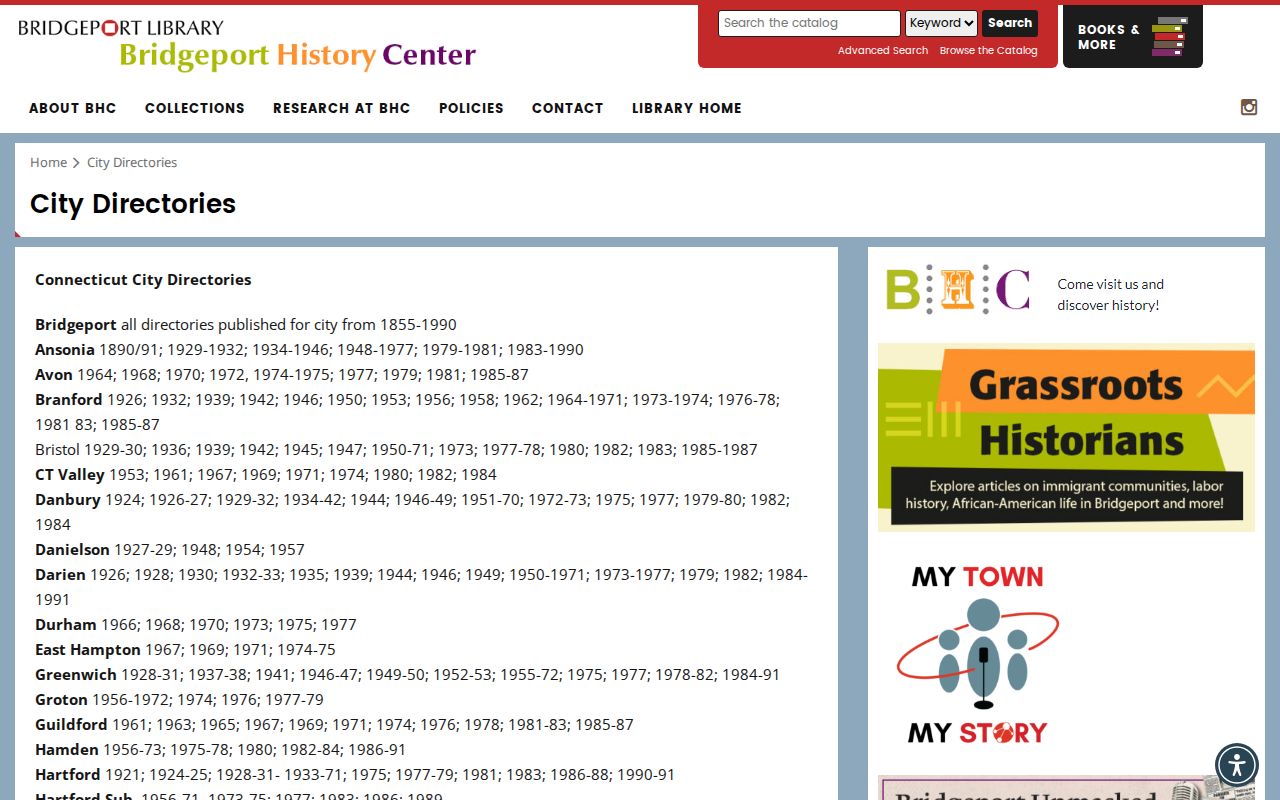
The holdings screen is useful because the year list itself reveals gaps and nearby volumes worth checking.
Bridgeport History Center special collections add photographs, maps, manuscripts, vertical files, and local-government material that can explain a name appearing in a directory.
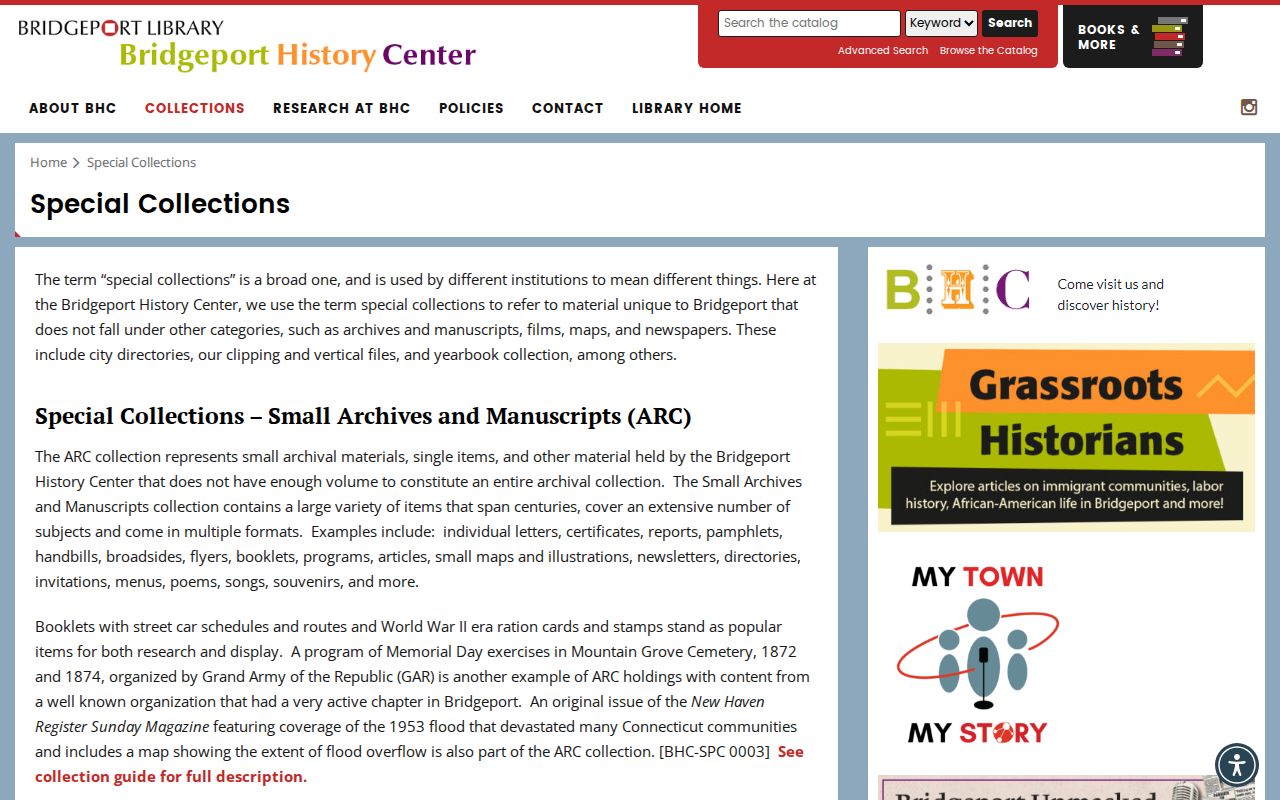
Ask for the call number and access condition before planning a visit.
Norwalk Directory Years and Gaps
Norwalk Public Library provides a second anchor for Fairfield County research. Its city-directory page reports 1871-1991 holdings, a cross-reference set from 1980 to the present, and telephone books from 1980 to the present. The local-history guide says originals commonly exist in two copies for most years from about 1890/91 to 1992. It also notes that 1920 and 1943-44 were not published, while Library of Congress microfilm begins in 1882 and Norwalk Museum or Town Clerk copies include 1874/75.
A missing volume is not the same as a missing household. Publication may have paused, an edition may have served a neighboring place, or a copy may sit in a different collection. Search the nearest years, compare the street line with a census enumeration district, and use a newspaper or vital index to explain a gap. Norwalk's local collection also holds town records, photographs, burials, and genealogy material.
Review the Norwalk city-directory collection before assuming a year was never preserved.
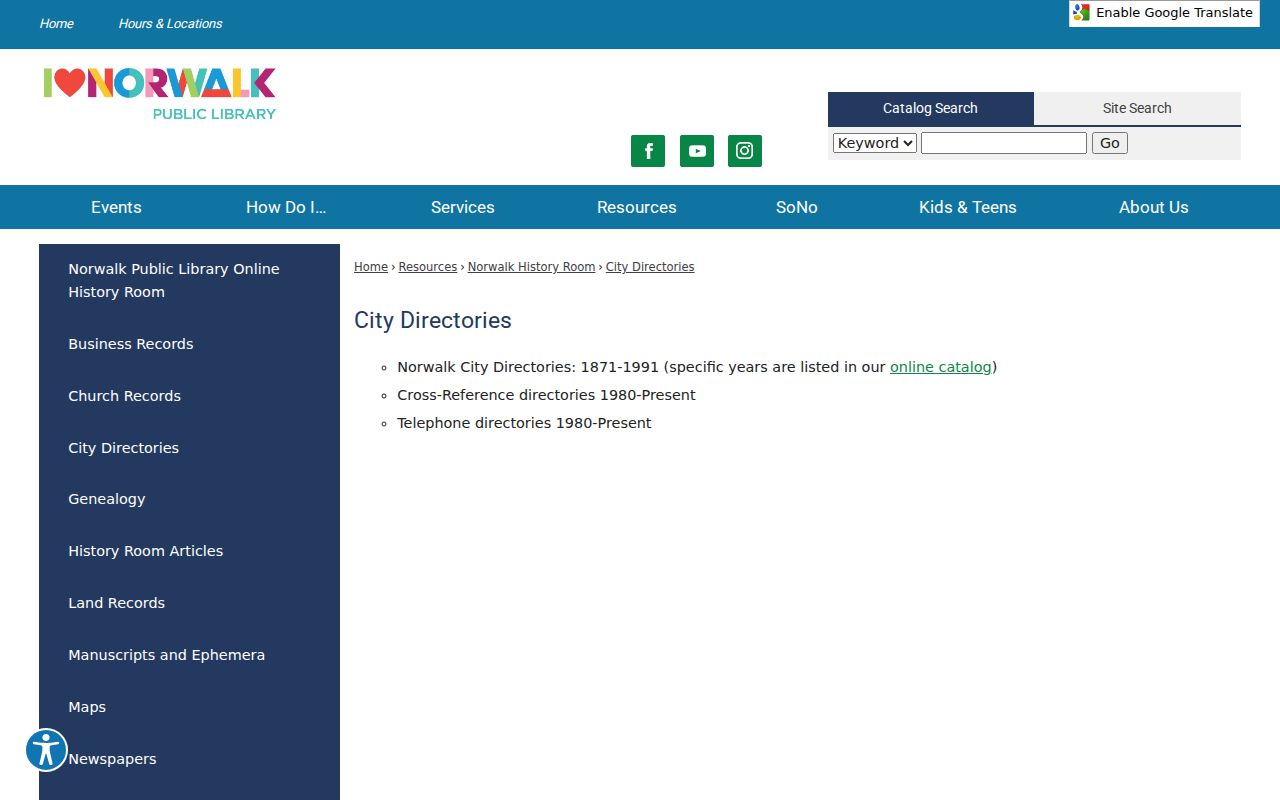
The collection page gives the year run, but the actual page image remains the authority for a printed entry.
Greenwich Digitized Fairfield Directories
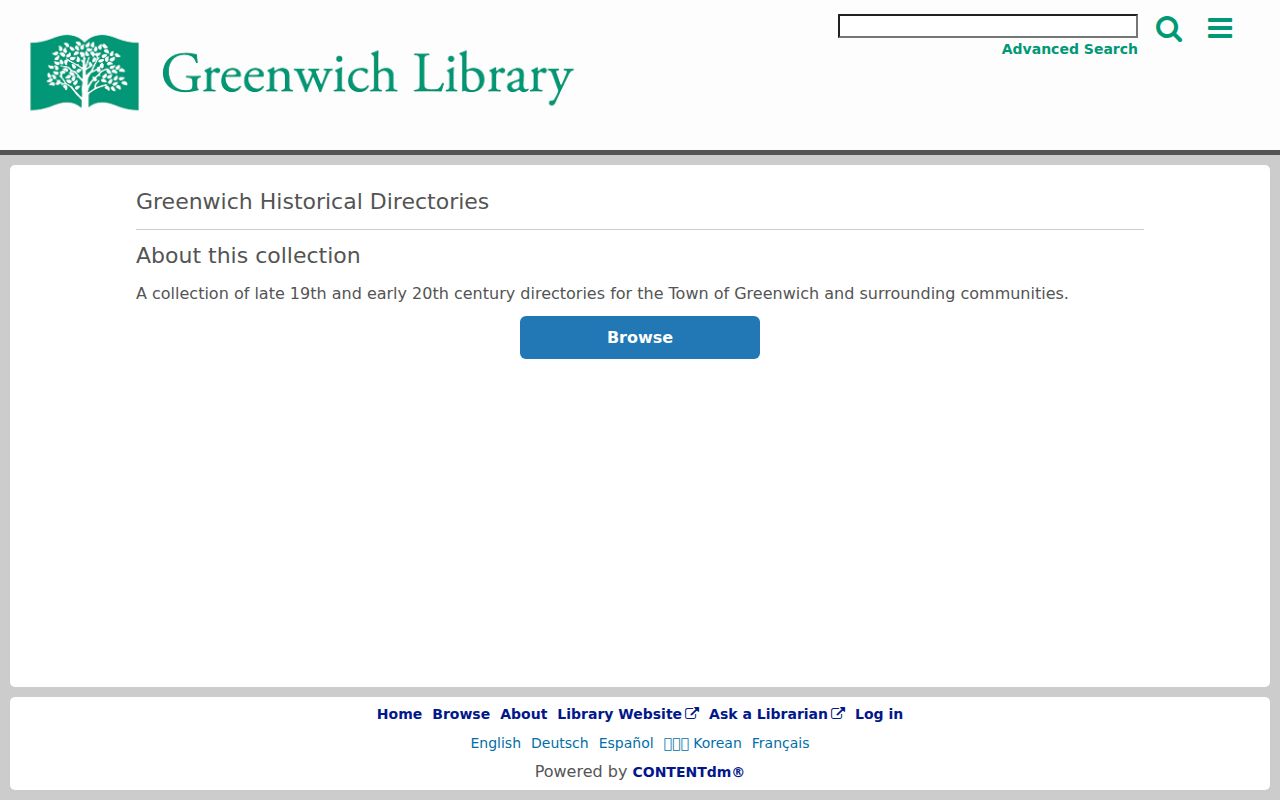
Greenwich Library's local-history and genealogy collection includes roughly 5,000 books, oral-history transcripts, yearbooks, maps, vertical files, pamphlets, periodicals, census microfilm, and late-nineteenth-century city directories. Its digital collection contains item pages for 1885-86, 1890-91, 1898-99, 1900-01, 1902-03, 1908-09, 1910-11, 1912-13, and a 1924 Richmond item. Access can be limited by the original microfilm or collection rights.
Turner's Directory 1898-99 is a particularly helpful teaching item. Metadata identifies E.F. Turner Directory & Co. of Yonkers, the date, geography, business index, street guide, telephone cross-reference, and household or business profiles. OCR makes the volume searchable, but the scanned page is the authority. A line resembling “Lyon Harry, carpenter h Washington nr Purdy av” contains several abbreviations that OCR can distort.
The Turner's Directory 1898-99 item lets a reader inspect both metadata and scan.
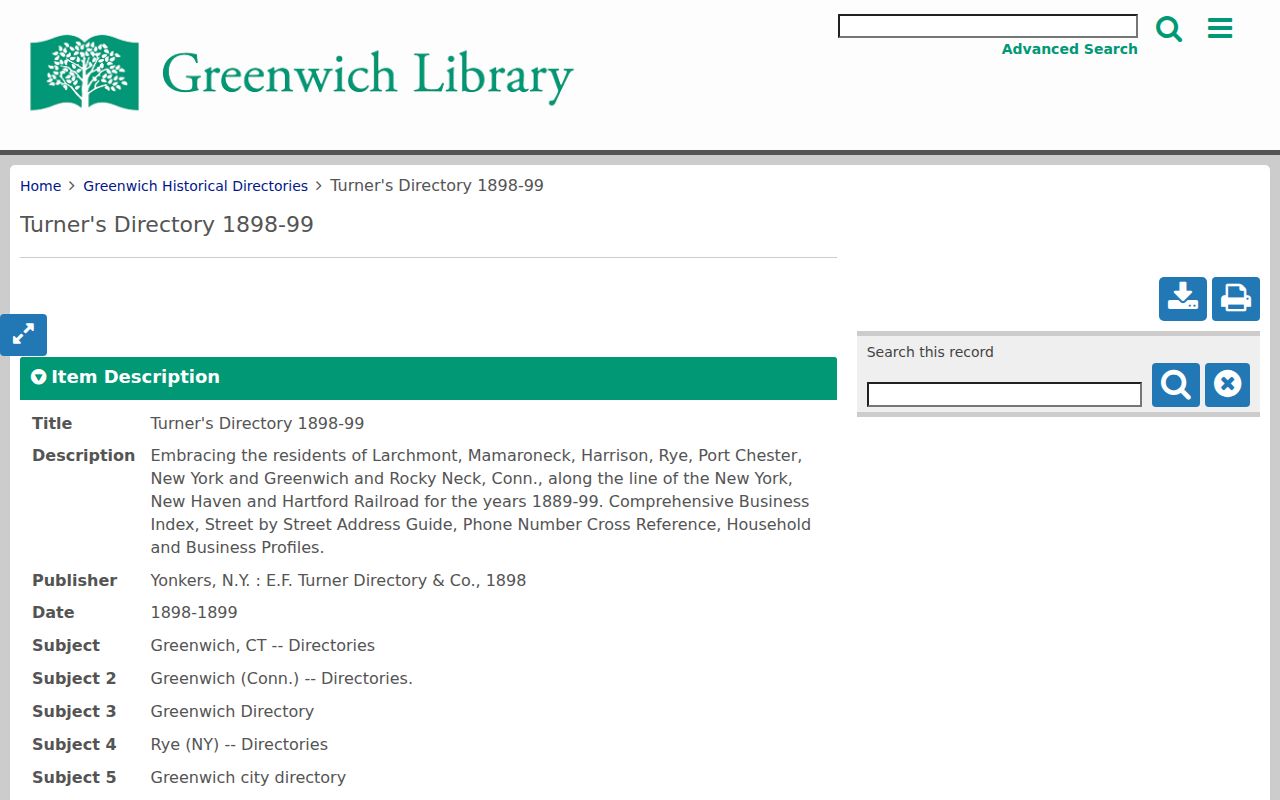
The image is useful for comparing the searchable text with the printed type and the street guide.
The broader Greenwich digital collection shows where other years live.
Save the item URL, title, date, publisher, and scan page when citing a historical directory.
Read a Fairfield City Directory Entry
A directory entry is a compact historical record. The name is the index key. The occupation is a dated description printed by the publisher. The address anchors the person to a street. A spouse, widow, board, or home marker can show a household relationship or residence status. A cross street or nearby landmark can help when a number is missing. The abbreviation key should be photographed or copied before the first entry is interpreted.
| Name | Surname and given name, with initials, suffixes, or alternate spelling as printed. |
|---|---|
| Address | House number, street, village, nearby cross street, or post-office label. |
| Occupation | A dated field that can help separate same-name people and connect a household to a place. |
| Household marker | Spouse, widow, home, board, or similar notation, interpreted from the volume's key. |
| Cross-reference | Street, telephone, business, or alphabetical pointer when the book includes it. |
- Criss-cross directory
- A reverse section arranged by street and number rather than by surname.
- Householder index
- A name-oriented list that can point to the address or main household entry.
- Abbreviation key
- The volume's legend for marks such as home, board, widow, avenue, or nearby.
- OCR
- Machine-read text from a scan; useful for finding a page, but not always accurate.
Read the original page before drawing a family conclusion. A directory can list a business, a household head, a boarder, or a person with a similar name. It cannot by itself establish current identity.
Fairfield Directory Cross-References
Name-to-street and street-to-name modes answer different questions. If the name is known, search the alphabetical section and copy the address exactly. If the address is known, use the street section, then look up every candidate in the name section. A telephone cross-reference, business index, or nearby landmark can add a second clue, but its date still matters.
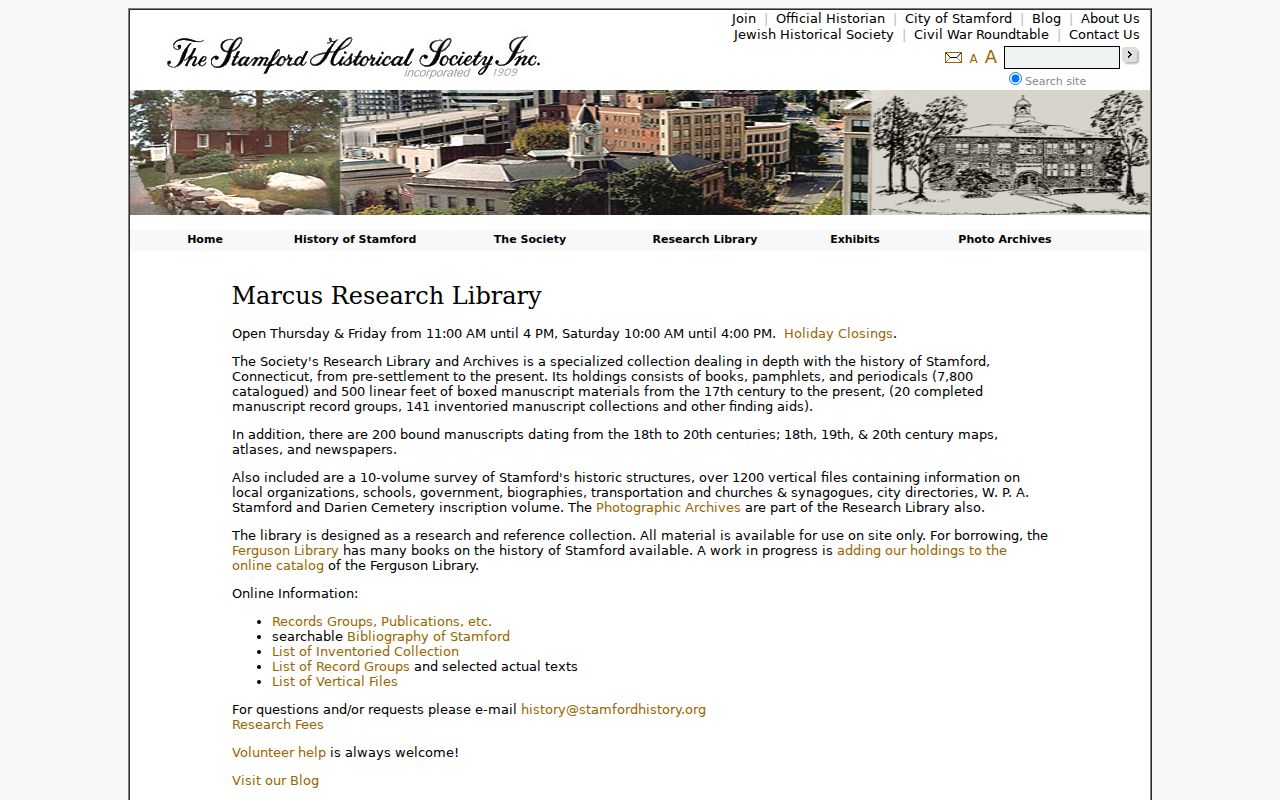
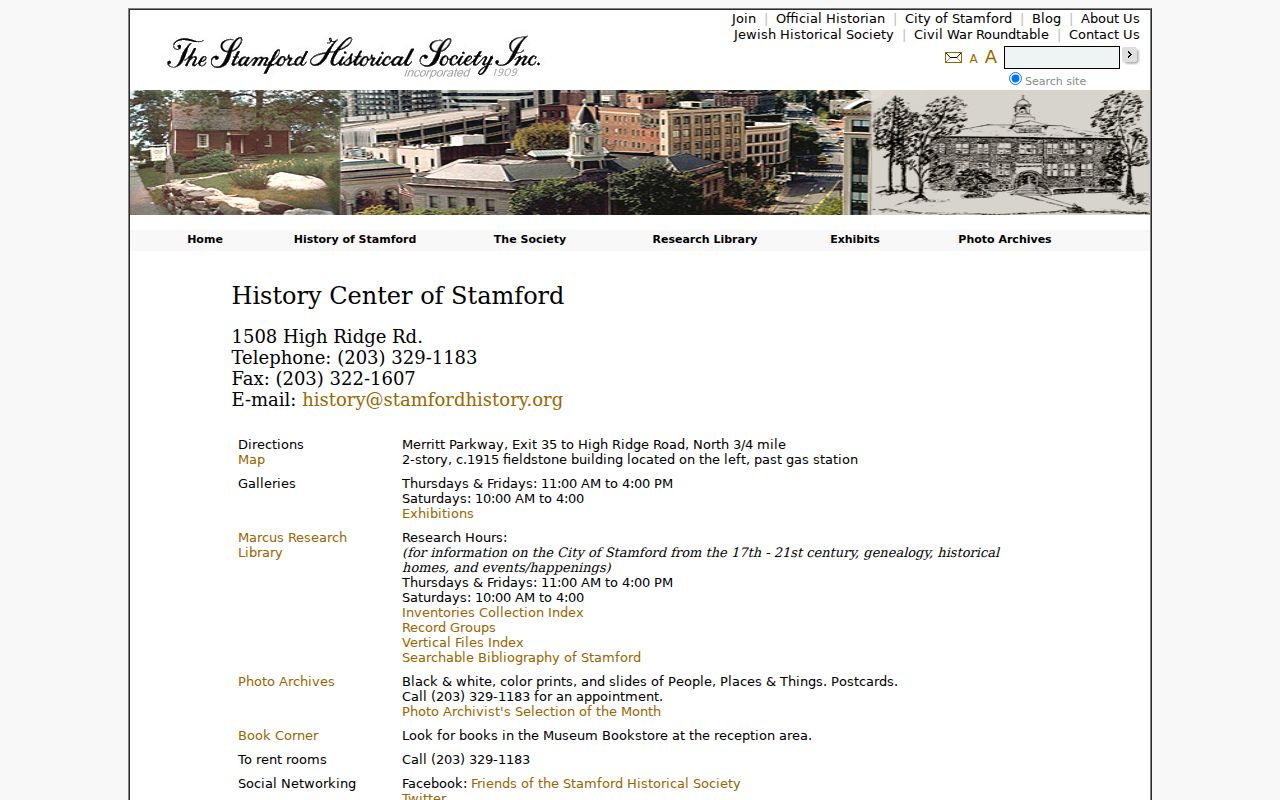
Stamford History Center's library collection includes city directories, maps, atlases, newspapers, WPA cemetery inscriptions, historic-structure material, and vertical files. Its services page gives on-site research hours of Thursday and Friday 11-4 and Saturday 10-4 at 1508 High Ridge Road, with appointments recommended. Those details make the collection useful for a house or household question that a current web search cannot answer.
The Stamford History Center library page describes the shelf and related map sources.
A physical collection may hold the exact edition, map, or vertical file that an online catalog only describes.
The center's services information supplies the practical visit details.
Use the directory volume first, then ask whether a house survey or cemetery file can confirm the surrounding history.
Fairfield Directory Years Have Gaps
Coverage is not annual, complete, or evenly distributed. Norwalk's known non-publication years show that a blank shelf can reflect a publication gap. Bridgeport's regional volumes may include a nearby town under a city, village, or post-office label. NARA's circa-1930 list includes Bridgeport with Easton, Fairfield, Monroe, Southport, Stratford, Trumbull, and Weston; Danbury can include Bethel; and Westport can include Saugatuck, Green Farms, Weston, and Wilton in selected years.
The Norwalk Hour index adds another local caution. It points to birth, marriage, obituary, and article notices, but the newspaper microfilm has a 1955 flood gap. When a family disappears from both a directory and the paper, search a neighboring title, cemetery, vital index, probate district, or the next available census. A gap should become a list of sources checked, not a claim about what happened.
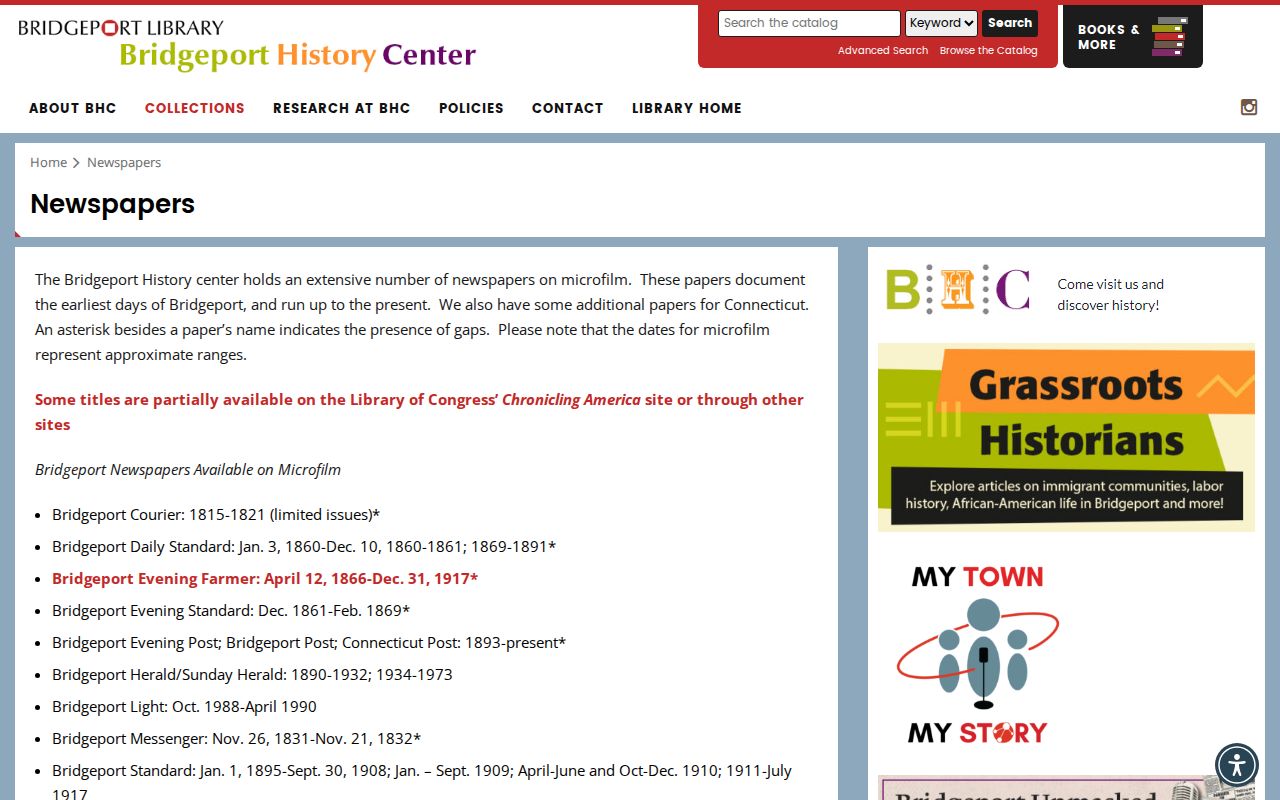
The Norwalk Hour Index is the practical newspaper cross-check. The Bridgeport History Center newspaper collection is another dated source for notices and articles.
Microfilm and index gaps make source comparison part of the method, not an optional extra.
Use Fairfield City Directories for Family History
Historical directory work is strongest when it follows a household through several dated points. Begin with the first known name or address, and preserve the exact spelling. Note the street suffix, village name, household marker, occupation, and nearby entries. Then use the next available directory year, even if the gap is several years. A move, marriage, death, or change in household may appear as a new address or a changed notation.
- Write down the target name, old street, municipality, village or post-office label, and likely year.
- Search the street section when the address is known, then verify the name in the alphabetical section.
- Repeat across the nearest available directory years and retain the volume title and publisher.
- Pair the directory with the 1900, 1910, 1920, 1930, 1940, or 1950 census and its enumeration district.
- Use an obituary, marriage or death index, cemetery record, deed, or probate file to explain a change.
- For a modern question, stop at the last historical appearance and use current records only under their own access rules.
A disappearance has several possible explanations: a move, a missed edition, a household change, a death, or a different spelling. Deeds explain ownership, while directories and census schedules explain household appearance. Those tracks should stay separate.
Pair Fairfield Directories With Census
The federal census is released under a 72-year rule, making 1950 the latest full household-name census in the research set. Census schedules can add ages, relationships, birthplaces, occupations, and enumeration-district context. A directory can supply the street sequence between census years. A deed can show a property transfer. An obituary or probate file can explain a departure or death.
FamilySearch supplies Connecticut collections for marriages, deaths, church records, naturalization, pre-1850 vital records, and other historical sets. Its Monroe catalog sample shows land records from 1823-1912 with a general index from 1823-1924. A Sherman sample shows land records from 1803-1933 with an index from 1804-1931. Image access may require a login, affiliate, or library visit.
The FamilySearch Connecticut collection is a broad starting point.
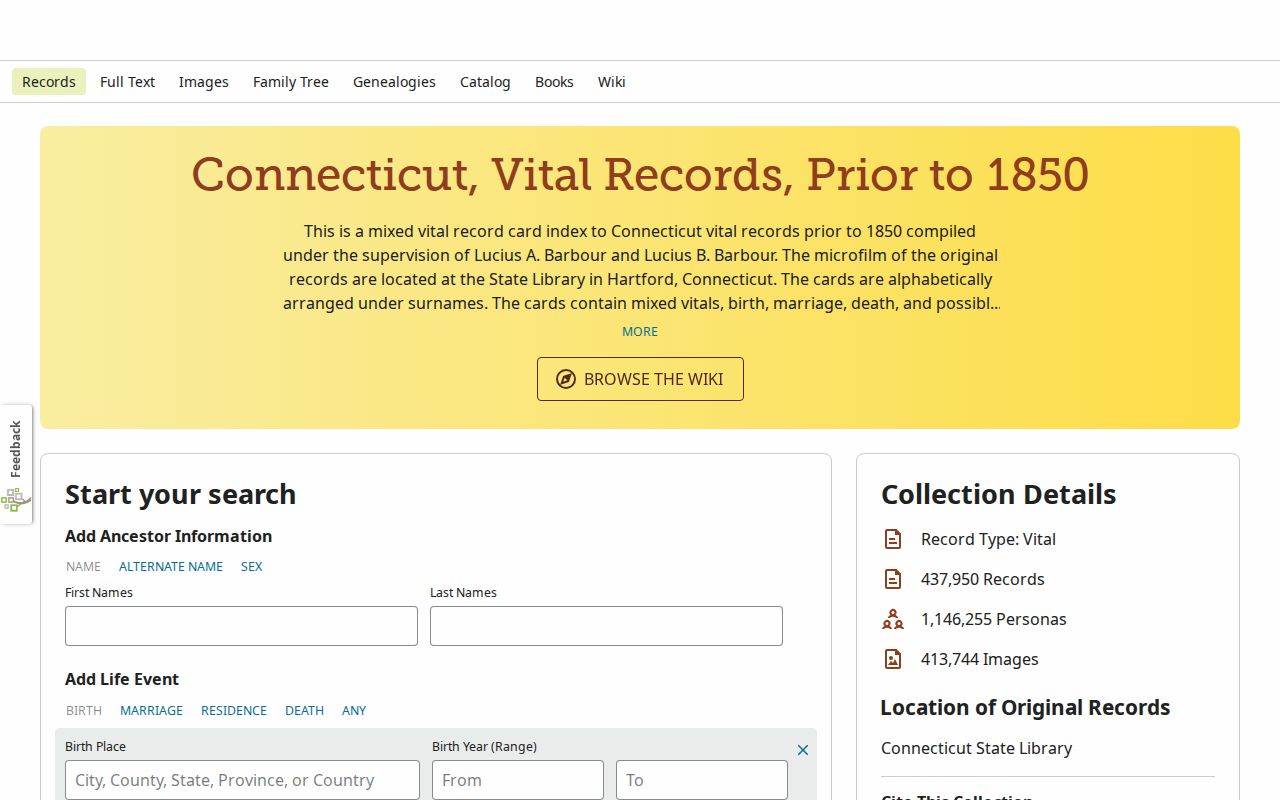
Indexed collection results need the original image, catalog citation, or local copy route before a family relationship is treated as settled.
For land-record context, the Monroe catalog is a useful example of a town-specific historical shelf.
Catalog coverage is not a promise that every Fairfield town book is remotely viewable, so record the access restriction.
Fairfield House Files and Maps
Fairfield Museum's house and property research service uses preservation surveys, Bridgeport directories, atlases, tax and probate material, photographs, and an interactive historic-house map. Stamford History Center holds house surveys and neighborhood inventories. Greenwich Historical Society preserves deeds, maps, directories, manuscripts, photographs, and finding aids. These collections can connect a parcel to a former owner or neighborhood without pretending that an old directory is a current roster.
Sanborn maps supply physical evidence where they exist. Confirmed county examples include Bridgeport 1898 and 1913, a central Bridgeport 1904 sheet, Darien 1946, and Danbury through a 1929-March 1950 set. A map can show a building footprint, use, outbuilding, street alignment, and nearby structure. It cannot name every resident or prove a deed transfer.
The Fairfield Museum house and property collection is a targeted route for one address.
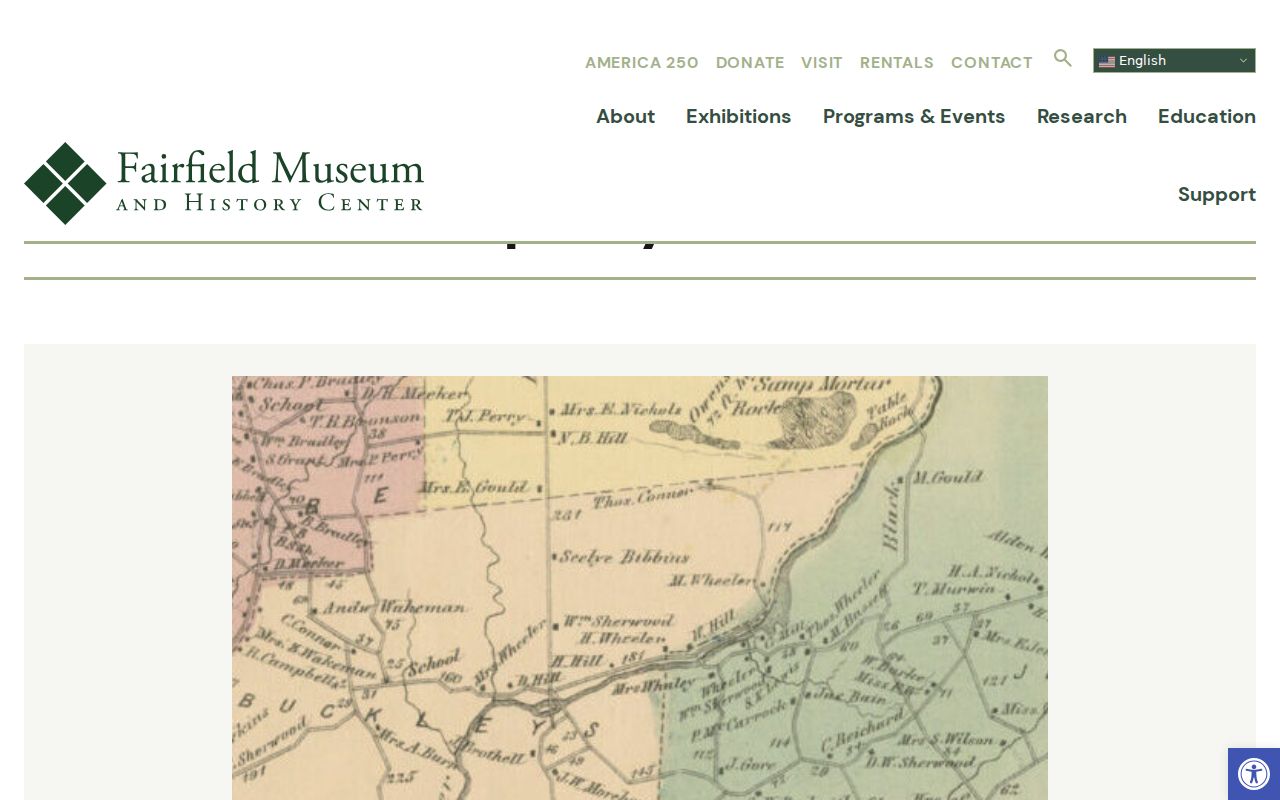
House files are most useful when their map, survey, directory, and deed references are recorded together.
Fairfield Historical Person Search Limits
A city directory records a publication moment. It may show a household head, a business, a dated address, or a cross-reference. It may not show a child, guest, unlisted adult, or person who moved between editions. OCR may miss a character. A village label may stand for a broader service area. A current assessor card, voter record, or court result should never be assumed from a historical line alone.
Source quality. Treat a directory as an occupant clue, a census as a household snapshot, a deed as a recorded title instrument, an obituary as a dated notice, and a probate file as a court-held estate record. Cite the source that supports each claim.
For a modern identity question, the Fairfield resident lookup uses current records with their own field and privacy limits. For a whole street, use the address chain rather than turning a historical collection into a current directory.