
Find Fairfield Residents in Layers
A name, street, or old address points to a different starting record. For a current owner clue, use the municipal assessor or GIS parcel card. For a registered voter, use the Connecticut lookup and note the town, party status, and public birth-year field. For a deed, search the Town Clerk in the municipality where the land sits. For a former household, move to a city directory, census schedule, newspaper index, or cemetery record.
The strongest result is a chain, not a single hit. Record the municipality first, then save the exact name spelling, situs address, parcel or account number, mailing address, date of the card, and the source URL. A court party, business agent, directory occupant, or property owner may be the same person, but each record proves only the role printed by its custodian.
- Identify the Fairfield County town and the question: owner, voter, court party, heir, historical occupant, or current contact.
- Run the narrowest official search available, keeping the result date and the field labels.
- Use a second record type to test the name, town, parcel, year, spouse, or business connection.
- Request the underlying image or certified copy when an index entry matters.
- Stop at a privacy or coverage boundary and report that limit plainly.
Note: A public index is a lead to a record, not a promise that every resident or household member appears there.
Where Fairfield Resident Records Live
Fairfield County is a geographic name, not an active county government. Connecticut abolished county government on October 1, 1960, so the town or city tied to the physical parcel keeps the land record, tax roll, local vital record, election material, trade name, and many permit files. State systems supply the court, vital, license, business, voter, and privacy layers. Libraries and historical societies preserve the older people-and-place material that never became a live web directory.
That division changes the first sentence of a records request. Ask a Town Clerk for the municipality's deed, map, trade-name, marriage, or election record. Ask the assessor for a parcel or field card. Ask the Registrar of Voters about the official local list. Ask a library for a specific town, year, street, and collection. A request that simply says “Fairfield County resident list” does not name a custodian that can answer it.
Municipal Town Clerks
Land records, maps, trade names, local vital certificates, elections, military discharges, notary and dog-license filings.
Bridgeport Town Clerk is a municipal example.
Municipal Assessors
Owner, situs, mailing address, parcel ID, assessment, sales references, and building-card fields, where published.
Fairfield Vision is the local property-search example.
State Record Systems
Courts, statewide vital registrations, voter lookup, licenses, business filings, and privacy programs.
Connecticut Judicial Branch supplies the statewide court routes.
Fairfield Starts With the Town
The county's 23 municipalities use different portals and different historical cutoffs. Bridgeport has a legacy I2 land-record index and a newer publicsearch screen. Greenwich reports digitized land records back to the 1920s and offers a publicsearch index, assessor requests, and GIS forms. Other towns may use Cott Systems, Vision, a municipal viewer, a courthouse terminal, or a clerk's counter without offering the same fields online.
Postal geography adds another trap. Cos Cob, Glenville, Old Greenwich, and Riverside are Greenwich-town postal places. Southport and Greens Farms are postal labels connected to Fairfield and Westport. New Fairfield's 06812 is listed with a Danbury association, and a Weston address can carry a Westport branch label. Save the USPS city line beside the municipal situs rather than using one as a substitute for the other.
For older work, the legal description and parcel ID often outlast a street number. A subdivision name, lot, map, abutting road, or book-and-page reference can bridge a renamed road or a different village label. The same fields help a clerk find a pre-digital book when an online name search returns nothing.
Fairfield Assessor Search Fields
A municipal assessment card is the most useful first stop when the starting clue is an address. The Fairfield Vision landing page describes a final 2025 Grand List and field-card PDFs, while other municipal Vision screens use the same broad pattern. The card can show a current assessed owner, situs, mailing address, parcel or account number, building facts, assessment values, exemptions, and a sale or transfer reference.
Do not turn a tax card into an occupancy claim. The owner may be a trust, estate, LLC, government body, or person who receives mail elsewhere. Assessment is a tax-roll value, not a market price. A sales-history line is a lead to the Town Clerk's land-record index, not a complete chain of title.
| Property or situs address | Physical parcel location used for direct search, GIS, permits, and street browsing. |
|---|---|
| Owner name | Name on the assessment roll; search spelling, entity, trust, and estate variants. |
| Mailing address | Destination for tax correspondence; it may be another town, state, office, or P.O. box. |
| Parcel or account ID | Durable key connecting the card to GIS, a plat, and a deed citation. |
| Sales and transfer data | Possible volume and page or date lead; confirm it in the Town Clerk index. |
| Assessment and card date | Tax-roll context that must stay paired with its municipal year and exemption note. |
See the Fairfield Vision property search for the local example. If the web form does not expose a needed field, the municipality may still provide a card, map, or limited phone lookup.
For a visual look at the public-record guidance that frames these requests, the Connecticut FOI guidance is the right state-level starting point.
The FOI material reinforces the fallback: request an existing, clearly identified record from the custodian rather than asking an office to create a new resident analysis.
Fairfield Voter Lookup Clues
The Connecticut Voter Registration Lookup is a statewide name-and-street clue, not a complete Fairfield County directory. The inspected field pattern uses last name, optional first name, street name, voter ID or other alternative modes, and a town or statewide scope when offered. A public result may show name, residence address, party, year of birth, and town or district details. Month and day of birth are not ordinary public fields after Public Act 26-1 §96.
A full voter file is a separate regulated product. The Secretary of the State form lists a $300 CSV request, purpose certification, and limits against personal, private, commercial, advertising, solicitation, marketing, or harassment uses. A town Registrar of Voters is the local route for inspection, correction, and questions about a protected or inactive record. No unrestricted block roster follows from the public lookup.
| Public clue | What it can establish | What it cannot establish |
|---|---|---|
| Name and street | A possible official registration match in a town. | Every person at the address or a current household. |
| Party and year of birth | Displayed registration fields for disambiguation. | Ballot choice or a full date of birth. |
| Participation history | Whether the record shows participation by the allowed method. | How anyone voted. |
| Protected-voter handling | That officials may suppress a name or address for safety. | A lawful way to reverse the suppression. |
Connecticut recognizes unaffiliated voters and also has an Independent party label. Party changes can take three months before party privileges, so a result must be read as a dated registration snapshot.
To see the search surface itself, the state voter lookup screen shows why town and street spelling matter.
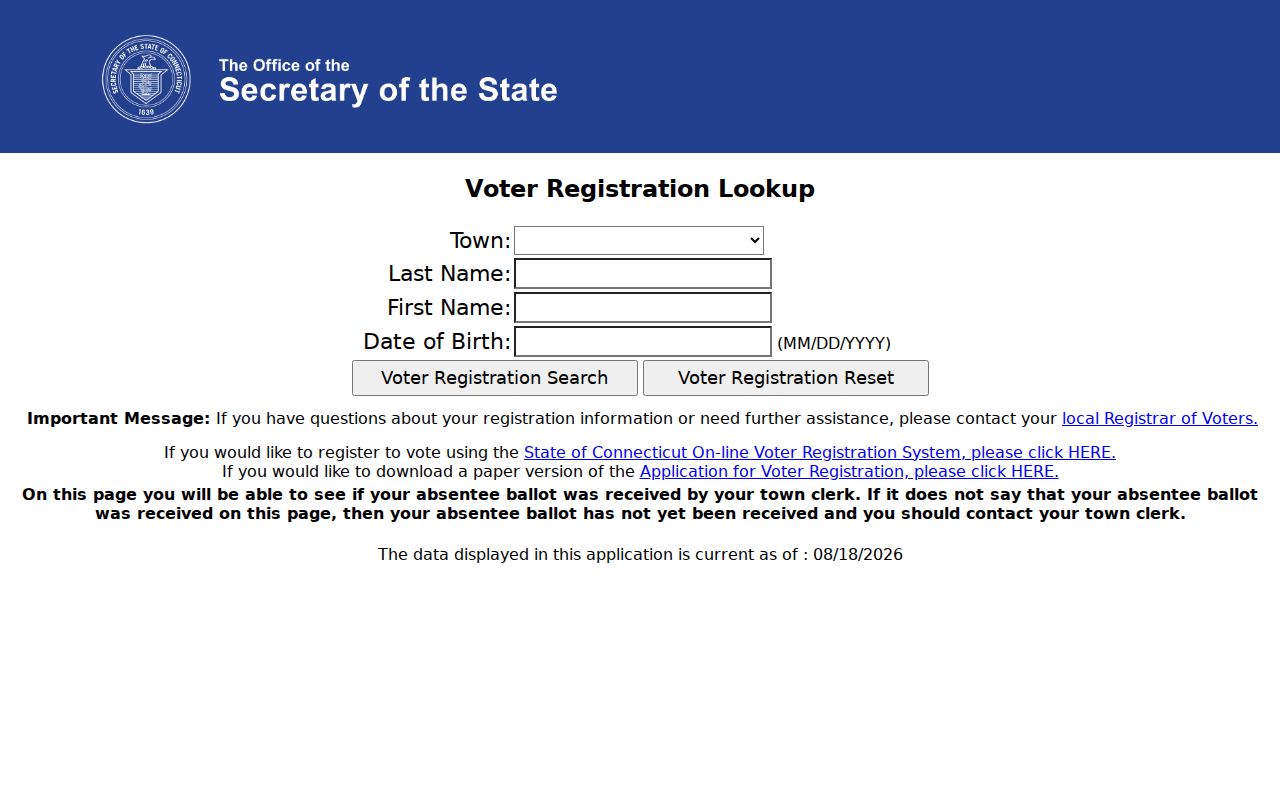
Use the screen as a starting clue, then confirm the question with the municipal registrar and a second lawful source.
Fairfield Current Resident Directory Sources
Current resident evidence is spread across records with different subjects. The assessor describes an owner and tax mailing destination. The voter system describes a registered voter under public-field rules. A deed index names parties to a recorded instrument. A permit portal names an applicant, owner, or agent tied to an address. A professional license or business filing shows an official role, not necessarily a home.
| Source | Role Listed | Keeper | Access Route |
|---|---|---|---|
| Assessor or Vision card | Assessed owner and tax-mail address | Municipal assessor | Portal, GIS, card request |
| Voter lookup | Registered voter and public status fields | State and town registrars | Public lookup or regulated file |
| Land-record index | Grantor, grantee, mortgage, lien, or release party | Municipal Town Clerk | Index, image, vault, or mail |
| Permit or code record | Applicant, owner, agent, inspection, or certificate | Municipal department | Portal or records request |
| Business or license result | Entity officer, agent, licensee, or credential holder | SOTS or state agency | Public search and agency route |
These rows are useful precisely because they do not say the same thing. A resident lookup becomes more reliable when the municipality, parcel, year, party role, or event date agrees across two independent systems. If a source is historical, label the last dated appearance rather than calling it current.
Fairfield Court and Probate Checks
The Connecticut Judicial Branch is statewide, so a Fairfield County court search is routed by judicial district rather than county clerk. The civil inquiry portal offers party-name, docket-number, attorney, property-address, court-event, short-calendar, legal-notice, and foreclosure-related modes. Party name requires a last name in the documented workflow, with first name, location, category, case status, and sort filters to narrow a common match.
A result can show a case name, docket, court, category, party role, attorney, motions, history, status, and scheduled dates. Public electronic civil documents generally begin on or after January 1, 2014; small-claims material generally begins on or after October 16, 2017. Older material may require a courthouse terminal or clerk request. A docket is a case identifier, not a finding of liability.
Probate is a separate route. Fairfield-area districts include Fairfield, Bridgeport, Danbury, Darien-New Canaan, Northern Fairfield County in Bethel, Norwalk-Wilton, and Stratford. A district file may connect a deceased resident to a fiduciary, heirs, address, or property transfer. Use the Connecticut Probate Courts Manual to identify the correct district, then ask about access and copy rules.
The image below comes from the Connecticut civil inquiry portal used for the Fairfield research. It is a portal reference, not a complete case file.
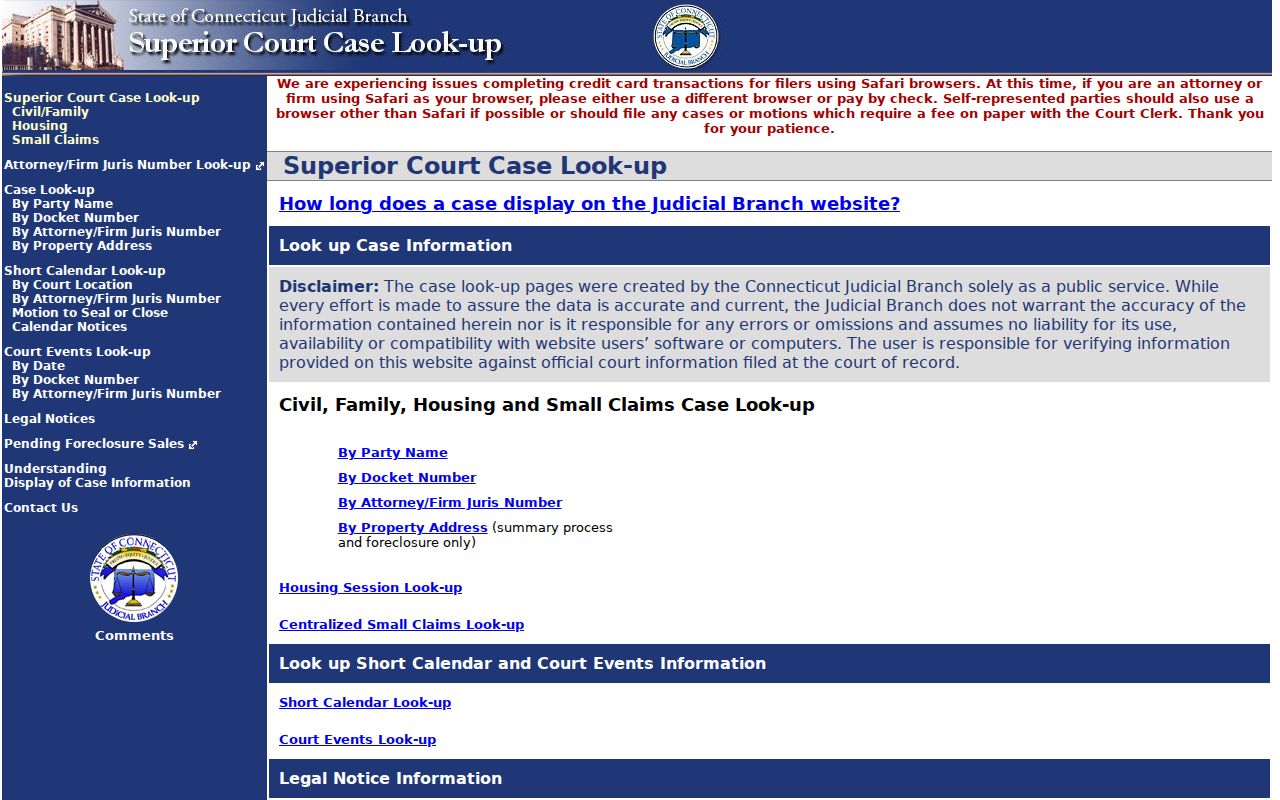
For an official result, preserve the docket number and request the underlying file or certified copy from the clerk.
Fairfield Vital Records Have Gates
Connecticut's Department of Public Health maintains statewide birth, death, marriage, and fetal-death registrations from July 1, 1897 forward, while local registrars hold event-town records. A birth, death, or marriage question therefore begins with the event town and date. A birth certificate under 100 years is restricted under Conn. Gen. Stat. §7-51, while records at least 100 years old are open under the stated rule. Death copies are generally available to people 18 or older, and marriage copies to people 18 or older, with Social Security number limits.
The state birth form asks for the subject's name, date and town of birth, parents, requester, relationship, reason, ID, mailing address, and copy type. The state fee is $30; the inspected town form uses a $20 full-copy structure. The current death form lists a $20 copy fee, requester relationship options, an SSN question, and a veteran section. A marriage form uses the event date and town, requester details, and $20 payment. Divorce decrees belong to Superior Court, not DPH.
The Connecticut vital-records hub shows the state and local issuing routes.
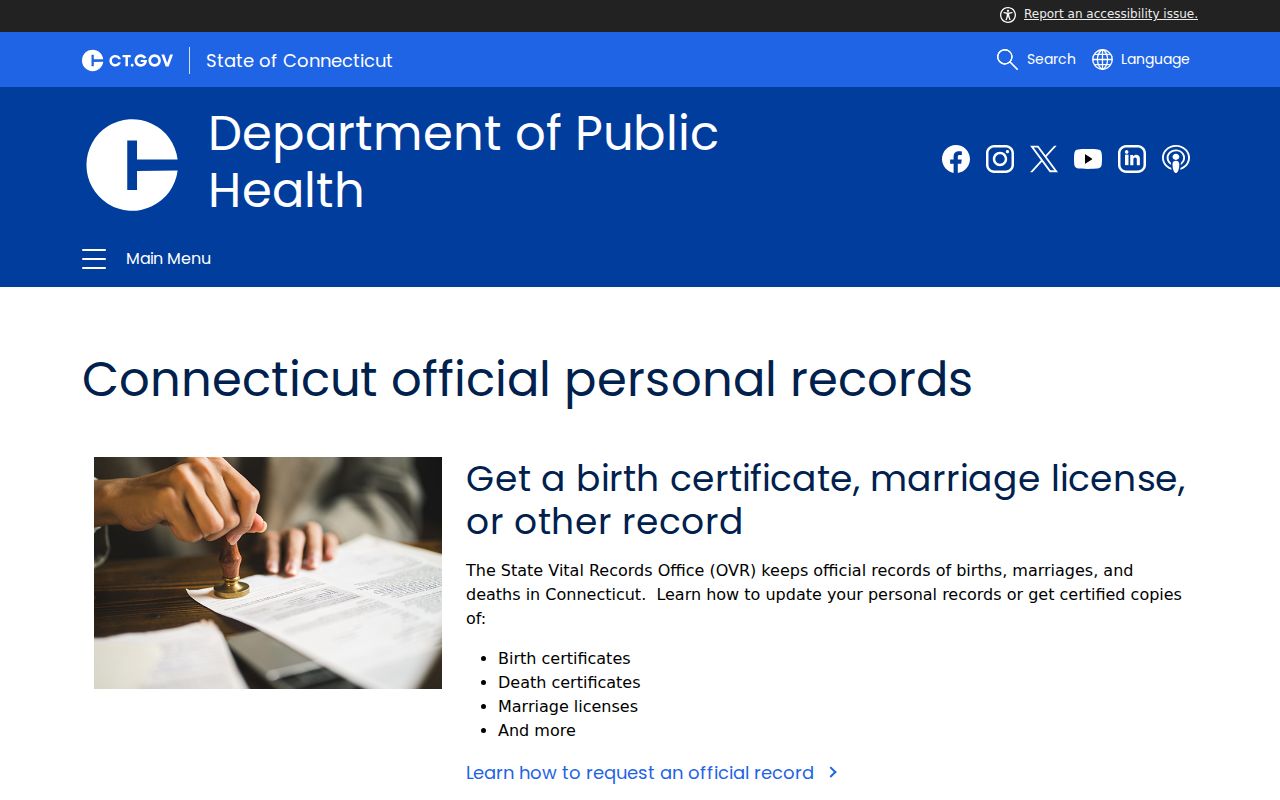
The hub is useful for choosing the right form, but a certificate request still depends on eligibility, ID, relationship proof, and the custodian that holds the event record.
Fairfield Libraries Hold Past Names
Printed city directories, reverse directories, yearbooks, newspapers, cemetery books, maps, and oral histories add the historical layer. Bridgeport History Center holds directories, newspapers, yearbooks, genealogy material, plat and Sanborn maps, and affiliate access to major genealogy databases. Norwalk's Local History collection adds directories, town records, photographs, and the Hour index. Greenwich Library holds directories, census microfilm, maps, vertical files, oral histories, and newspaper indexes.
The Norwalk Hour index is an especially practical route. It covers cumulative birth, marriage, obituary, and article references, while the underlying newspaper is on microfilm from 1895 to the present with a 1955 flood gap. Bridgeport's History Center offers narrow obituary, birth, or wedding research for a fee and warns that microfilm runs have gaps. A library entry is a dated clue; it is not a current resident record.
See the Norwalk Hour Index when a death or family notice is the missing link.
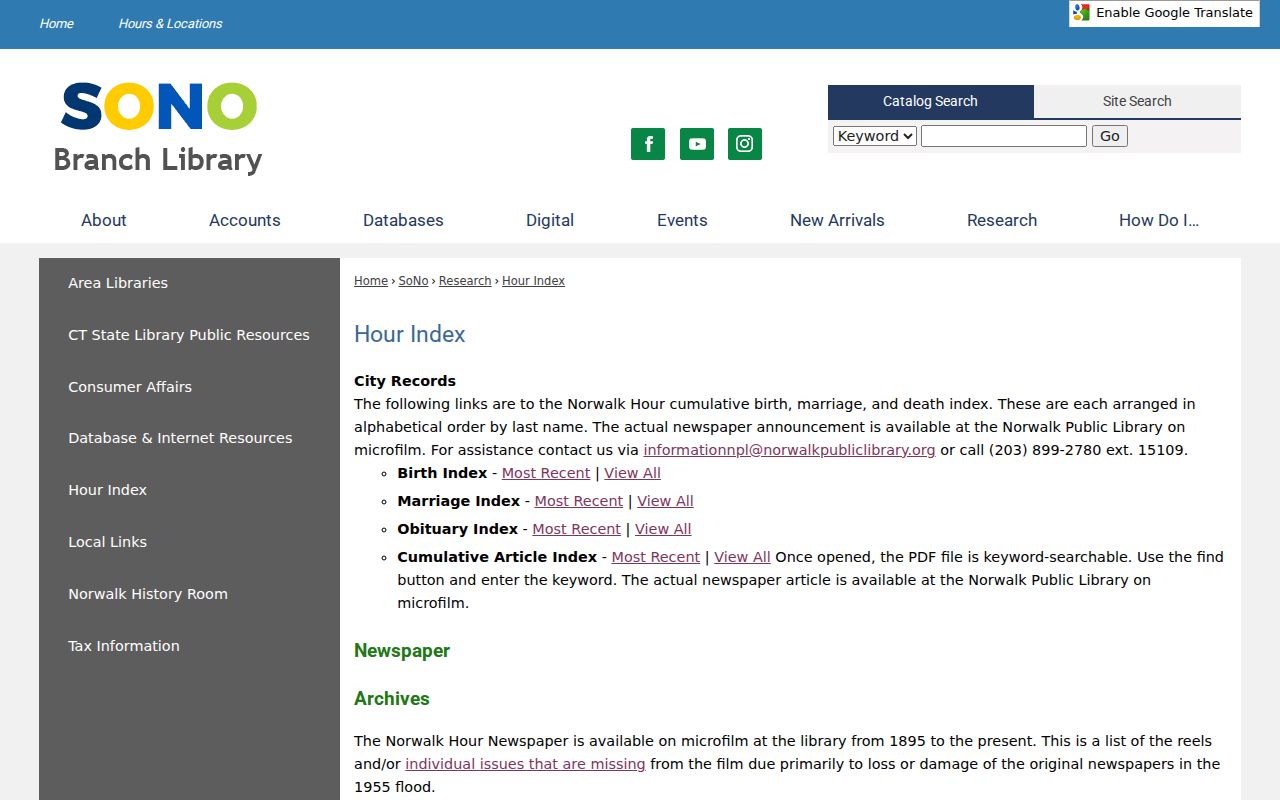
Ask the library for the indexed reference and then request the page image, noting the date, paper, and any gap.
Fairfield Business and License Clues
Business and professional records help separate people with the same name. Secretary of the State Business Services routes to business records, UCC filings, the CONCORD application, and the Business Data Portal. A result may show legal entity, status, formation or annual-report dates, registered agent, principal or filing address, and officers or managers when that filing provides them. Municipal assumed-name filings remain with the Town Clerk.
Connecticut eLicense accepts license type, prefix, number, status, business or DBA name, first name, last name, city, state, ZIP, and country. The detail view can show a credential number and type, mailing address, effective and expiration dates, status, and sometimes scope or supervisor. A license address or registered office is an affiliation clue. It is not proof of a home address or current presence.
The Secretary of the State's Business Services search route documents the official entry points. UCC reports should be checked directly through the Secretary of the State because the research found official warnings about paid government-imposter letters.
Use the entity number, credential number, or filing date to keep an affiliation separate from a residential conclusion.
Fairfield Historical Resident Directory Trails
The historical shelf is strongest when a name is paired with a year and a place. Bridgeport's own city-directory run spans 1855-1990. Norwalk's separate collection spans 1871-1991, with cross-reference and telephone material from 1980 forward. Greenwich Library's digitized directory collection covers 1890-1922, and the item metadata includes a business index, street guide, telephone cross-reference, and household or business profiles.
For a former resident, start in the street section when the address is known, then move to the alphabetical section. Preserve the printed spelling, occupation, spouse or widow notation, and abbreviations. Pair the nearest directory with the 1900, 1910, 1920, 1930, 1940, or 1950 census, then use a deed, obituary, cemetery, or probate record to explain a change. The Fairfield city directory collections explain the fuller shelf-by-shelf treatment.
FamilySearch adds Connecticut marriage, death, church, naturalization, pre-1850 vital, and land-record catalog routes. Image access can require an account, affiliate center, or a local library visit. The Bridgeport History Center directory holdings are the regional starting shelf.
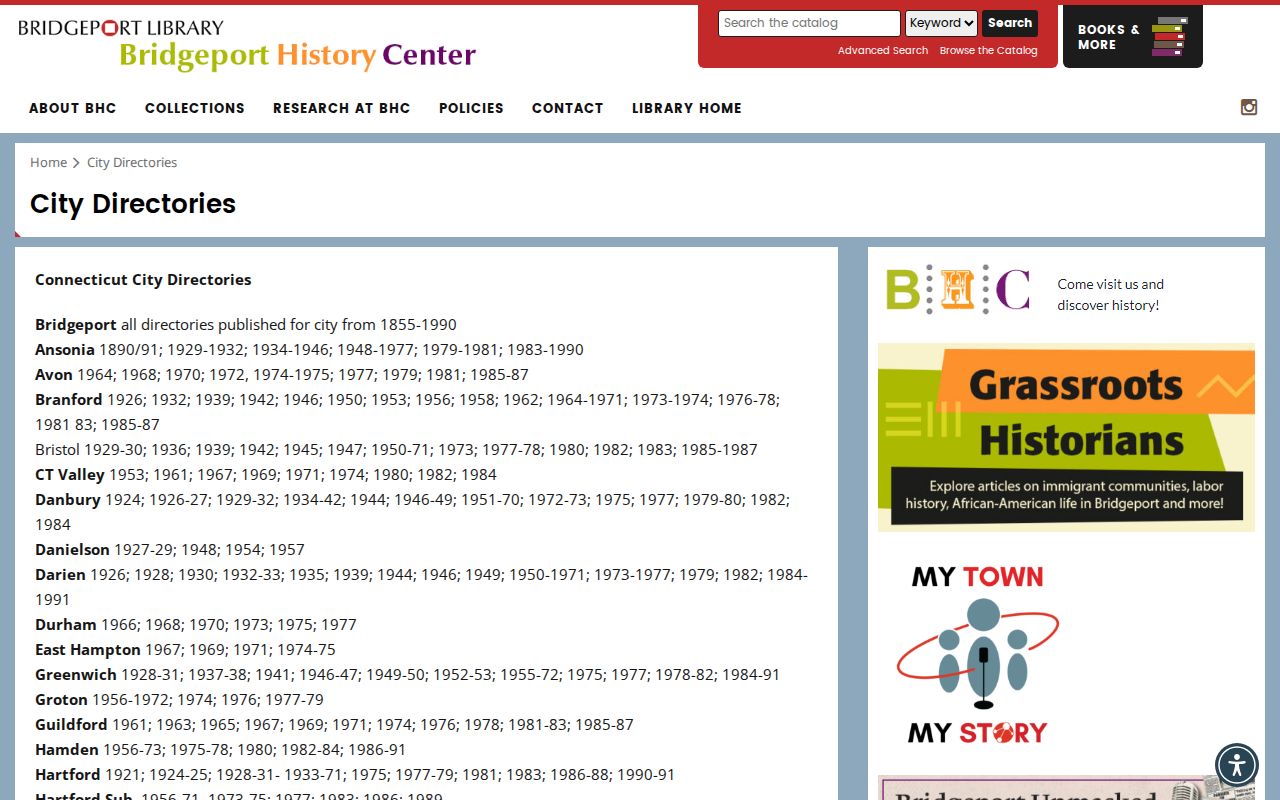
The library holdings show why “not online” does not mean “not preserved”; it may mean a shelf, microfilm reader, or finding aid is the next step.
Fairfield ZIP and Address Crosswalk
A ZIP code is delivery geography. The municipal situs is the parcel's legal and tax geography. The mailing address is the address used for tax correspondence. The legal description is the deed and plat key. USPS supplies standardized delivery results, while the Census ZCTA relationship file supplies a statistical approximation that does not include every delivery ZIP, PO-box association, or unique code.
Keep those fields in one record: town, postal city, ZIP, street line, parcel ID, and legal description. This matters for 06812, associated with New Fairfield and a Danbury postal route, and 06883, where a Weston municipal address can use a Westport branch label. The ZIP Code Directory page separates the full table from the parcel and street work.
For a current delivery result, use the USPS ZIP lookup by address, city and state, or ZIP. Do not treat a postal city as a county or municipal boundary.
Fairfield Privacy and Safety Boundaries
Connecticut's Freedom of Information Act, Conn. Gen. Stat. §§1-200 through 1-242, allows access to existing non-exempt records. The state guidance gives a general 25-cent per-page state copy ceiling and a 50-cent municipal copy ceiling, while certification and other media can have separate charges. An agency does not have to create a new resident list from several databases.
The Address Confidentiality Program gives eligible survivors a substitute mailing address and protects the underlying address through statutory processes. A voter may also seek safety-based registry suppression under Conn. Gen. Stat. §9-50(d). The Connecticut Data Privacy Act, Conn. Gen. Stat. §§42-515 through 42-526, gives covered consumers access, correction, deletion, portability, and certain opt-out rights. It does not erase a Town Clerk deed, court docket, vital record, or statutory assessment record.
Lawful personal use. Fairfield records are useful for family history, civic research, reconnecting, and checking a public filing. Do not use a record to stalk, harass, threaten, or expose a protected address. When a custodian withholds a field, leave it out rather than trying to reconstruct it from other sources.
The state privacy program is described at Safe at Home / Address Confidentiality.
That source is a reminder that a blank or substitute address can be an intentional safety protection, not a failed search.
Fairfield Records Change Over Time
Current access is shaped by recent policy changes. Public Act 25-168 changed Connecticut land-record recording fees on July 1, 2025, so older copy advice should be checked against the municipality's current schedule. Greenwich moved public permit and inspection information into City Squared on February 3, 2025. These are access changes, not new county-wide databases.
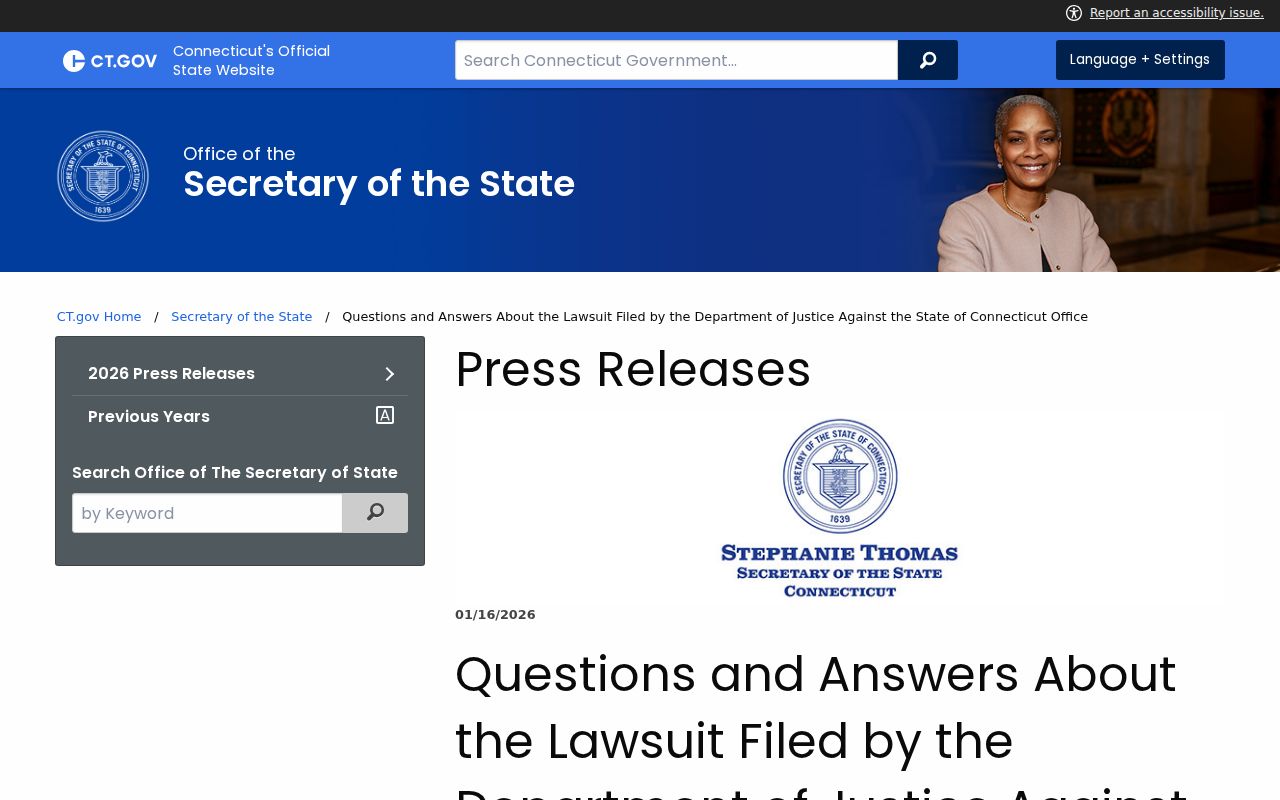
Voter access also has a dated context. A January 2026 Secretary of the State release described a federal lawsuit seeking a sensitive statewide file, and a July 2026 Attorney General release reported dismissal of that action. Neither release expands the ordinary public lookup into full birth dates, driver-license information, or Social Security data. Use the live state form for the fields it actually displays.
The Secretary of the State's 2026 voter-file Q&A captures the policy distinction.
For any time-sensitive detail, preserve the access date with the portal name and then confirm it at the custodian.
Fairfield Search Results Need Context
The most common mistake is treating a data match as a complete identity. An assessor owner can be an entity or a person who lives elsewhere. A voter record can be protected or stale. A court result can concern a different person with the same name. A directory listing can describe an occupant many decades ago. A business address can belong to an agent. The right response is to add a dated, independent source, not to stack more guesses.
- Assessor card: useful for owner, tax mail, parcel, and assessment context; it does not identify every person at the situs.
- Voter lookup: useful for a public registration clue and town; it does not reveal ballot choice, a protected address, or a full household.
- Deed index: useful for recorded property parties and instruments; it does not establish occupancy or a personal relationship.
- Directory or obituary: useful for a dated historical identity and address clue; it does not establish a current location or contact.
When a portal is thin, use a specific fallback: municipality, street, parcel, date range, book and page, docket, certificate, or collection title. A precise request gives the clerk or librarian something they can actually search.
Fairfield Records Office Fallbacks
Online search is only one access channel. Bridgeport's Town Clerk page explains local land records, fees, maps, and search routes. Cott Systems offers the Connecticut Town Clerks Records entry and RECORDhub for participating towns, with guest index access and town-specific image rules. Greenwich's assessor can answer a limited set of owner, parcel, assessment, and transfer questions by phone and can provide field cards by request.
Older court files may be at a courthouse public terminal. Older directories may be on a library shelf or microfilm. A vital certificate may require a form, ID, eligibility proof, and payment. A probate file requires the district that served the town. Under the Connecticut FOI Act, ask for an existing non-exempt record from the actual custodian, and keep a written denial or access date if the request stops there.
Use the Connecticut Town Clerks Records entry point when the municipality participates. The RECORDhub destination is a separate Cott route with town-specific coverage.
Keep the town name with the portal because a county label alone does not identify the record custodian.
Fairfield's Public Record Safety Checks
Public records also attract scams. Connecticut's Department of Consumer Protection has warned about expensive deed-copy mailers that imitate official notices. The Attorney General described a UCC government-imposter letter, and the Secretary of the State warned about spoofing email. A notice can quote a real book, page, or entity name and still be private marketing or fraud.
Verify the domain yourself, confirm the fee on the custodian's page, and use the Town Clerk, Secretary of the State, Treasurer, court, or police number found independently. The Treasurer's CTBigList search and claim route are free through the state. A court, police, or family-emergency caller asking for an urgent payment is not authenticated by a public record.
For a name-and-heir clue, the Connecticut CTBigList search is a direct state route.
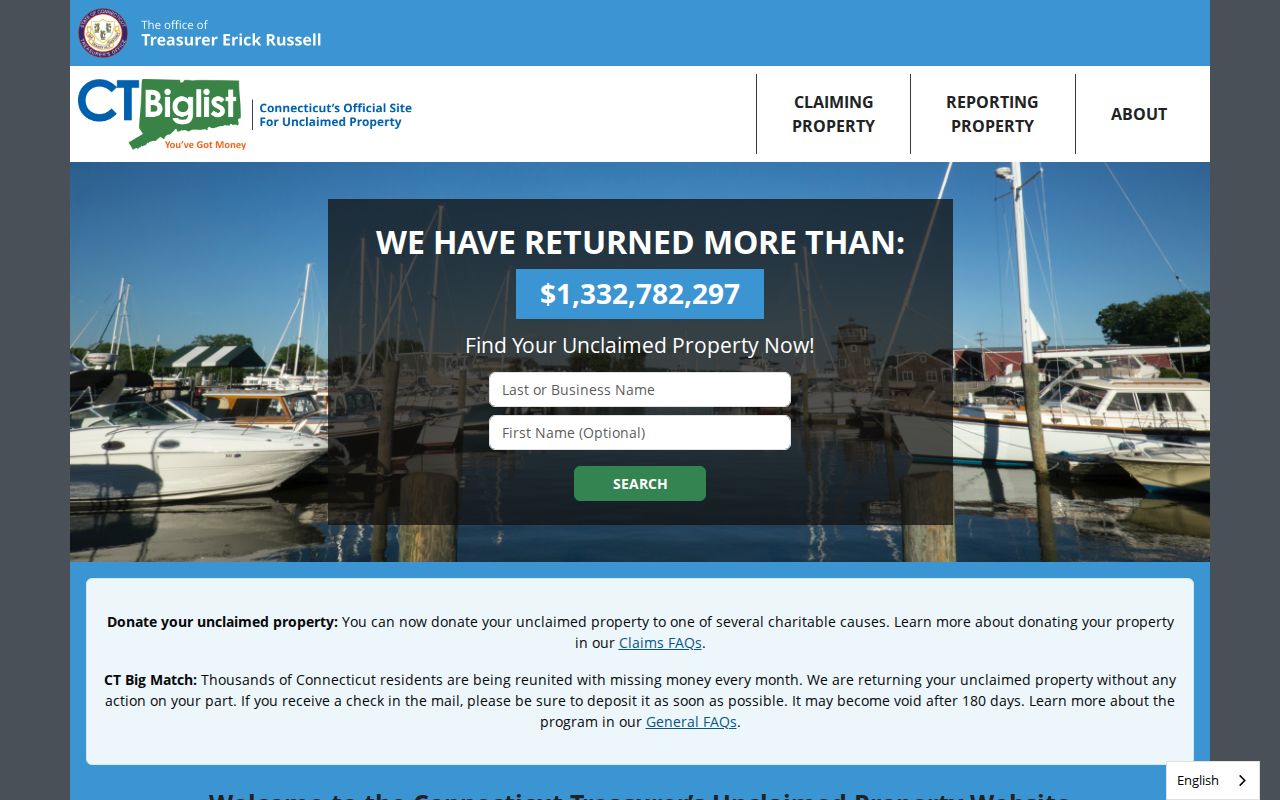
A search result is only a possible lead; a claim requires proof of ownership and identity through the Treasurer.
Fairfield Resident Directory Comparison
Official sources and compiled commercial data answer different kinds of questions. Official records retain a custodian, field definition, date, and access rule. A compiled report may be convenient, but it can merge names, carry old addresses, confuse a mailing address with a home, and omit suppression or correction context. A library directory can be excellent for family history while being a poor source for a current contact.
- Municipal assessor or GIS: parcel, owner, situs, mailing, and map link; the owner is not necessarily an occupant.
- Town Clerk land index: recorded instrument and legal description; coverage, copy fees, and older books vary by town.
- State lookup: defined public fields and an official custodian; privacy, purpose, and eligibility limits apply.
- Library or archive: historical context, directories, obituaries, and maps; runs, OCR, and on-site access vary.
- Compiled data service: one interface across mixed sources; freshness and matching quality may be unknown.
Choose the route by the question. Use the assessor for a parcel owner, the voter lookup for a public registration clue, the court portal for a party or docket, the vital custodian for a certificate, and the library for a dated historical person or address. That is the practical meaning of the Fairfield residents directory: a map to the right record, not a replacement for it.